I photographed this Great Blue Heron tossing a tadpole at the Lower Scarborough area of Sequoyah National Wildlife Refuge in eastern Oklahoma. This shallow wetland regularly attracts herons during spring, especially when amphibians are active along the water’s edge.
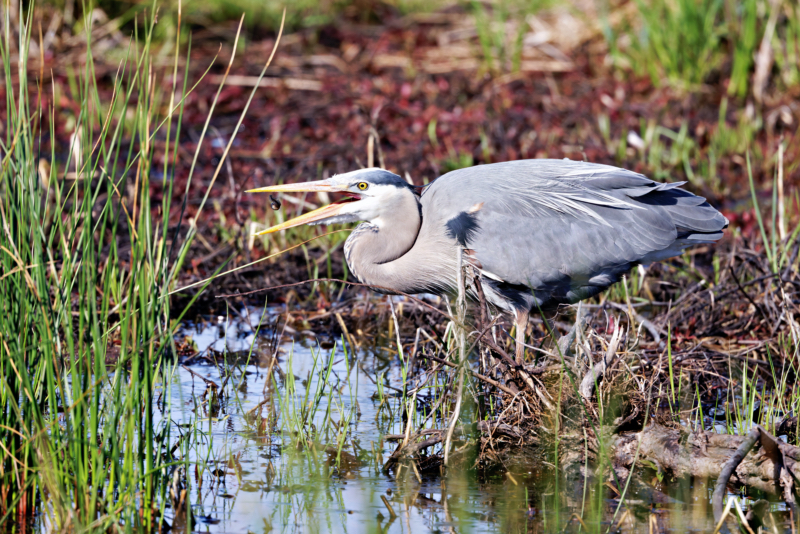
The moment stood out because the heron was not simply swallowing its prey. It repeatedly tossed the tadpole into the air before repositioning it. This behavior helps the bird align slippery prey head-first, making it easier to swallow. Great Blue Herons rely on patience and precise timing, and moments like this show how calculated their feeding behavior can be.
I was photographing from inside my pickup, which I often use as a mobile blind. The heron stayed relaxed, allowing me to observe and photograph without disturbing its routine. I rested my camera and lens on a bean bag draped over the open window, which provided solid support and helped keep the frame steady during the action.
How Great Blue Herons Handle Slippery Prey
Tadpoles and small fish can be difficult to control, especially in shallow water. By tossing the prey, the heron gains a better grip and ensures the animal is positioned properly before swallowing. This behavior is common during feeding but is easy to miss if you are not watching closely.
I have photographed similar behavior before, and this moment closely mirrors another encounter where a Great Blue Heron repeatedly tossed a fish to reposition it before swallowing, which I documented in more detail here: Great Blue Herons Tossing Fish: A Photographer’s Delight
Photography Notes From the Field
Fast, unpredictable movement requires quick reaction time. I kept my camera in manual exposure with Auto ISO so I could control shutter speed and aperture without chasing changing light. A fast shutter speed was critical for freezing the motion as the tadpole left the heron’s bill.
Moments like this are a reminder that wildlife photography is as much about observation as it is about equipment. Watching behavior closely often leads to stronger images than simply waiting for a bird to stand still.
I photographed this Heron from inside my pickup. My camera and lens were resting on a bean bag draped over the open window.
Gear Used:
- Camera: Canon EOS R5
- Lens: RF100-500 mm F4.5-7.1 L IS USM
Technical:
- Location: Sequoyah National Wildlife Refuge (Oklahoma)
- Date and Time Taken: April 3, 2022 (09:53 A. M.)
- Exposure Mode: Manual
- Aperture: f7.1
- Shutter speed: 1/3205
- ISO: 1000 (Auto)
- Exposure Compensation: 0
- Focal Length: 500 mm