My photograph today shows a Great Blue Heron slipping on ice while hunting on a frozen lake. Moments like this highlight how challenging winter conditions can be, even for birds that spend most of their lives around water. This Great Blue Heron was focused on food near the surface when it lost its footing and briefly went down on the ice.
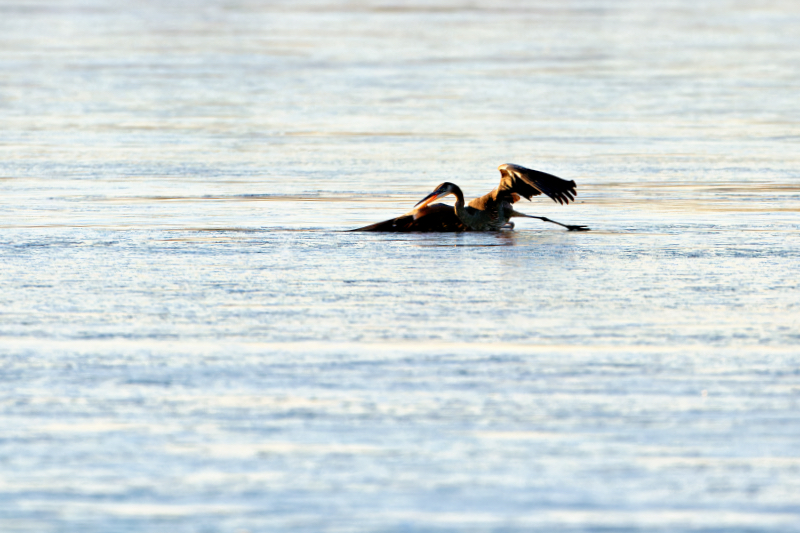
I have already shared a couple of earlier encounters with this same bird. In one post, I photographed the heron pecking at ice in an attempt to reach a fish trapped below the frozen surface (Great Blue Heron Attempts to Retrieve Frozen Fish). In another, I captured the heron standing its ground against a Bald Eagle that had moved in on the same hunting area (Great Blue Heron Stands its Ground Against Bald Eagle). This image adds a lighter moment to that short series.
Great Blue Heron Winter Hazards on Ice
Great Blue Herons are well adapted to shallow water, where they rely on long legs and slow, deliberate movements to stalk fish. Ice changes that equation. The smooth surface offers little traction, and their high center of gravity makes balance more difficult. Incidents like this Great Blue Heron slipping on ice are not unusual during winter, especially when herons continue to hunt in partially frozen lakes and rivers.
Another photographer documented similar behavior at Bear River, where an adult Great Blue Heron lost its footing while moving across ice (Great Blue Heron Slip Slidin’ Away). These moments show that even experienced wading birds are not immune to winter hazards.
Despite the risks, Great Blue Herons have several ways to improve stability on ice. They move slowly and place their feet carefully, spreading their toes to increase contact with the surface. When needed, they will also use their wings to regain balance. In many cases, they avoid thinner ice or open water edges where falling through would be more dangerous.
Image Information:
- Date: 01/12/14
- Time: 08:52 AM
- Camera: Canon EOS 7D
- Lens: Canon 500mm F4
- ISO: 640
- Aperture: 6.3
- Shutter: 1/2000
- Exposure Compensation: -0.3
- Focal Length: 500 (Fixed)