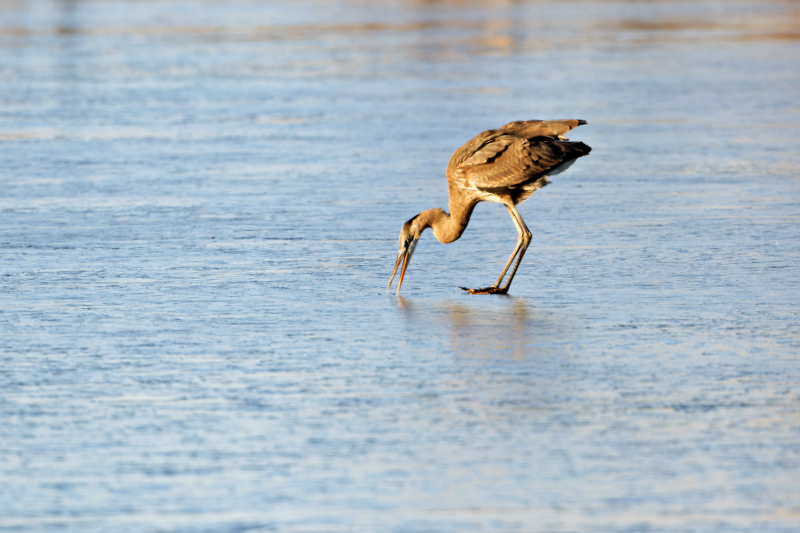
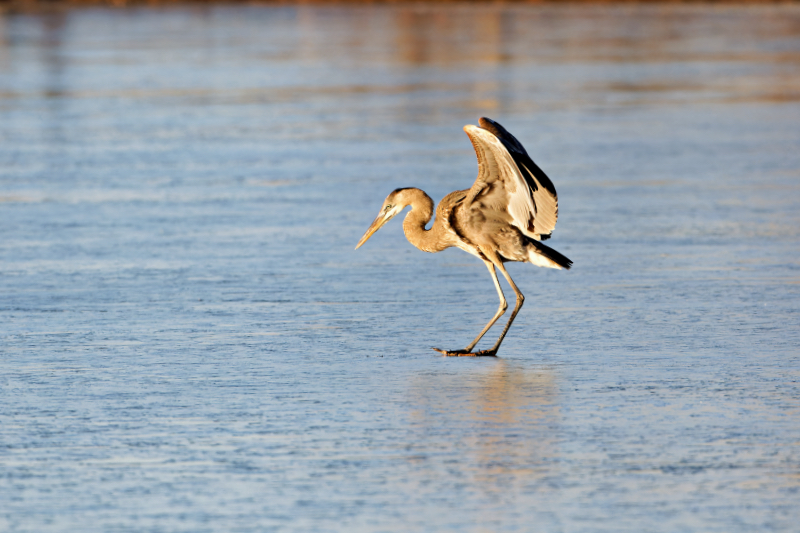
In January 2014, I photographed an immature Great Blue Heron trying to reach a fish trapped near the surface of a frozen lake. I watched it peck at the ice over and over, working at the same spot as if it might break through at any moment.
The fish looked like a shad, which is common in this lake. I had seen herons catch shad here before the water froze. This time, though, the fish was locked in place. I never saw the heron manage to pull it free.
Wildlife Notes
The heron stayed on the ice and kept pecking downward toward the trapped fish. It focused on the same area and showed steady persistence, even though the ice did not give easily.
I later photographed this same Great Blue Heron standing its ground against a Bald Eagle, showing the same persistence I saw while it worked at the ice.
Seeing that attempt up close was a reminder of how winter changes the rules. A food source can be visible and still be out of reach.
Witnessing this Heron persistently trying to retrieve the frozen shad provided a fascinating glimpse into the challenges birds and fish face during winter months. It exemplified the drive of wildlife to take advantage of any potential food source, no matter how difficult it is to obtain.
Why shad may be trapped near the surface ice
There are several possible reasons shad might end up embedded near the surface of a frozen lake:
- Accidental trapping: The surface can freeze quickly and cut fish off from deeper water, especially after a sudden temperature drop or a strong wind event that pushes water toward shallow areas.
- Shallow water: In shallow areas, the water column can freeze solid and encase fish, including shad.
- Seeking oxygen: During winter, deeper water can lose oxygen due to decomposition and reduced mixing. If oxygen levels are higher near the underside of the ice, shad may gather there and end up trapped as conditions shift.
- Ice holes: Open water around ice holes, whether from anglers or natural openings, can draw fish in. If the ice refreezes, they can become trapped.
- Competition among baitfish: Winter can tighten resources like oxygen and food. If shad get pushed toward the surface by competition, they may become more vulnerable to freezing near the ice or to predators.
Photography Notes
Winter light can make exposure tricky, especially when ice reflects more light than expected. To hold detail and reduce blur from the heron’s movement, I used a fast shutter speed while it pecked at the ice.
Distance mattered as well. Staying back allowed me to document the behavior without affecting what the bird was doing.
Image Information:
- Date: 01/12/14
- Time: 09:03 AM
- Camera: Canon EOS 7D
- Lens: Canon 500mm F4
- ISO: 640
- Aperture: f/7.1
- Shutter: 1/2000
- Exposure Compensation: -0.3
- Focal Length: 500mm (fixed)