Back in November 2012 I photographed a Northern Harrier perched on a speed limit sign at the Sequoyah National Wildlife Refuge in Oklahoma. Frost covered the bird from head to tail. The fall colors behind the sign made the scene even better. The cold morning light gave everything a calm look.
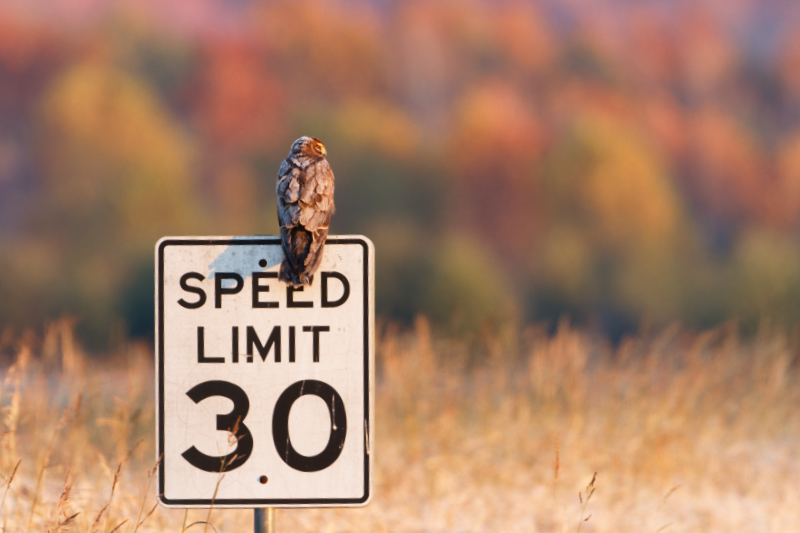
I stayed in my truck and watched the Harrier sit still on the sign. The frost on its back looked heavy, but the bird acted relaxed. Moments like these remind me how well wildlife handles the cold.
Wildlife Notes: How Birds Cope with Cold
Birds stay warm in winter in several ways. They keep their body temperature near 106 degrees, and they work hard to hold onto that heat. Feathers are a big part of this. Birds fluff their feathers to trap warm air close to their skin. Many species also grow extra feathers for the season.
Birds also have special scales on their feet and a system of veins and arteries that reduce heat loss. This adaptation helps them stand on ice or cold branches without trouble.
Another way birds stay warm is by shivering. It takes energy, but it produces heat fast. I often see small birds shake slightly on cold mornings.
Shelter also matters. Birds tuck into thick brush, tree cavities, or other covered spots to get out of the wind. Some birds roost together and share body heat. They reduce exposed surface area by tucking in their feet and pulling their head close.
Fat storage is another key strategy. Many species eat more during the short winter days so they can rely on stored fat during long nights. Chickadees and finches are good examples of this. Their winter weight can include more than ten percent body fat.
These adaptations show how well birds handle cold weather. A bird covered in frost is not in danger. It is simply doing what it is built to do.
Image Information:
- Date: 11/12/12
- Time: 8:02:27 AM
- Camera: Canon EOS 7D
- Lens: Canon 500 f4
- ISO: 640
- Aperture: 4
- Shutter: 1/320
- Exp. Comp.: 0.0
- Program: Aperture Priority
This is a gorgeous image and informative post.
Thank you my friend! Thank you for helping me to get my blog to where it is now.