A fresh snow changes everything in the yard. The feeders get busy, and the ground turns into a clean, bright stage.
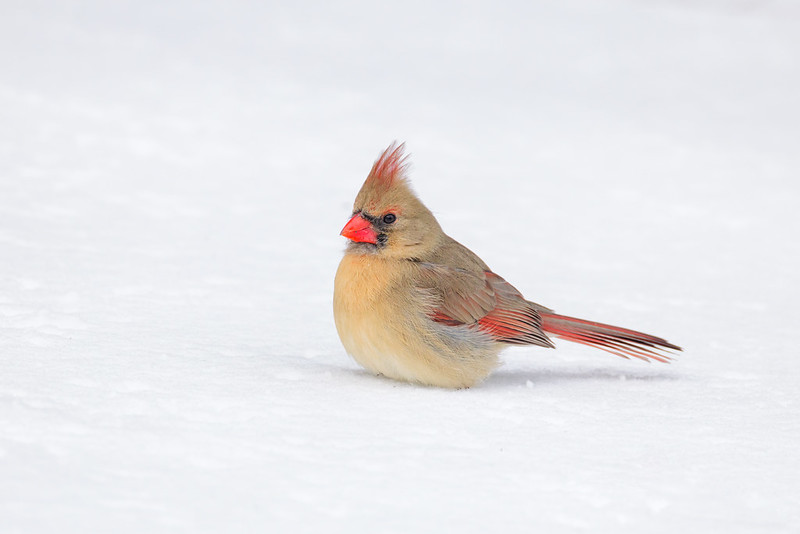
Today’s visitor was a female Northern Cardinal. She stood out against the white like she was painted in.
Wildlife Notes
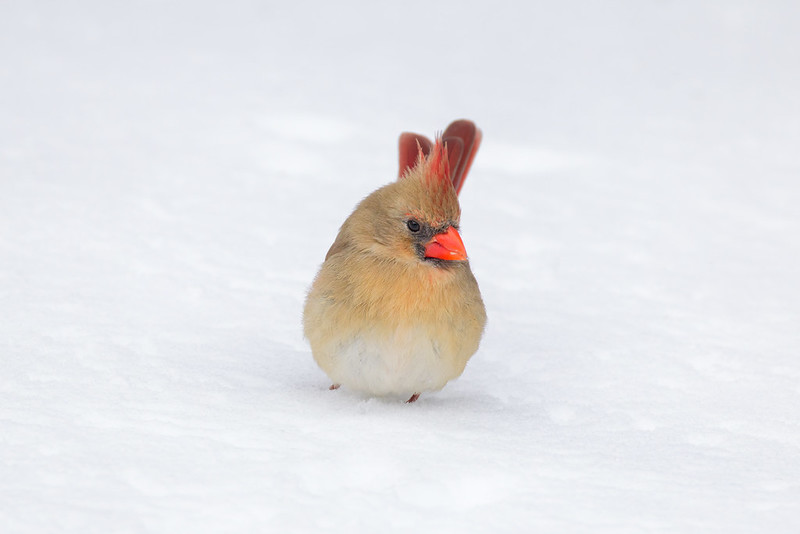
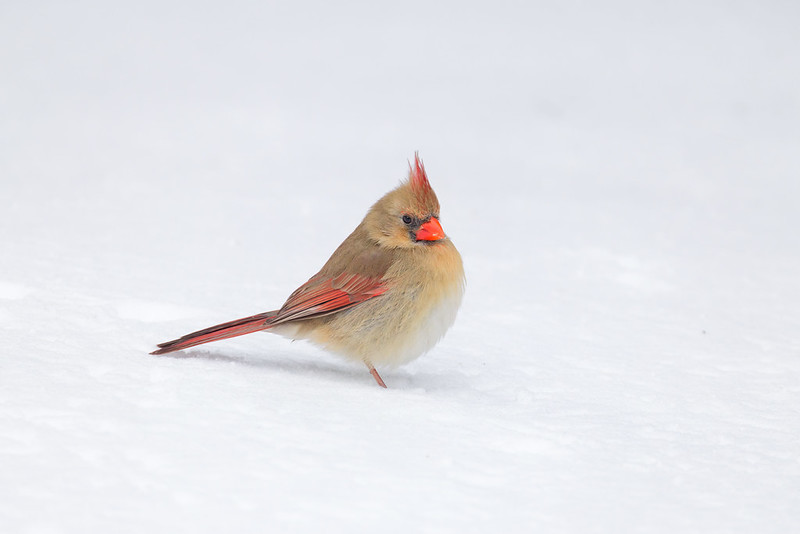
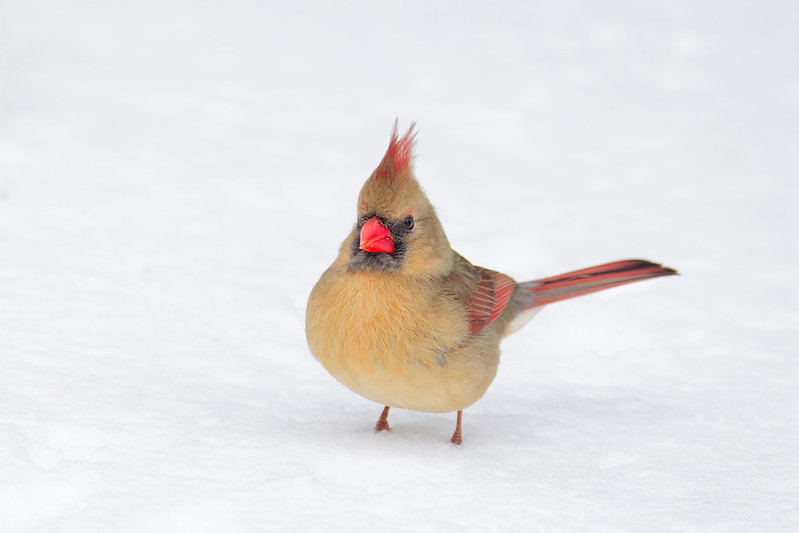
Female Northern Cardinals do not get the full red suit like the males. Instead, they wear warm tan and gray tones with red highlights in the wings, tail, and crest. That red-orange bill is still a dead giveaway, even in flat winter light.
What I like most about photographing a female cardinal in snow is the contrast. The bird looks soft and subtle, but those red accents pop hard against the white.
After a snow, cardinals often spend more time on the ground. They are built to crack seeds, so they will work edges, brushy spots, and any place the wind exposes food. In my yard, that usually means short hops, quick pauses, and a lot of scanning before they commit.
If you are watching for them, listen too. Even when they stay quiet, cardinals tend to move with purpose. They slip between shrubs and low branches, then drop down for a fast grab.
Female Northern Cardinal in Snow
These photos were made in my Arkansas yard right after the snowfall. The snow acts like a giant reflector, so the light is soft, but it is also bright enough to fool your meter.
I exposed for the bird and protected the whites as much as I could. Snow can go dull and gray fast if you let the camera underexpose it.
Photography Notes
Gear and settings
- Camera: Canon EOS R5 Mark II
- Lens: Canon RF 200–800mm F6.3–9 IS USM
- Focal length: 800mm
- Aperture: f/10
- Shutter speed: 1/2500 sec
- ISO: 3200
- Exposure comp: +2
- Support: Beanbag on deck rail
Why these settings worked
- +2 exposure compensation: Snow scenes usually push the camera to underexpose. The +2 helped keep the snow looking like snow while still holding detail in the bird.
- 1/2500 sec: Cardinals twitch, hop, and snap their heads fast. A high shutter speed keeps the eye and bill crisp.
- ISO 3200: I accepted the ISO to protect shutter speed. With modern bodies, clean detail beats motion blur every time.
- Beanbag on the deck rail: This is my quick, steady backyard setup. It takes the shake out, especially at 800mm, and it lets me stay comfortable and ready.
A simple snow-field tip
If you want the snow clean, watch your background and your meter. I try to keep a wide patch of untouched snow behind the bird. Then I check the histogram and bump exposure until the snow looks bright, not blown out.
Closing
This snow run in my yard has been a fun streak, and the female Northern Cardinal was a perfect subject to add to the set. Subtle color, strong shape, and that pop of red against white never gets old.
If you missed the earlier posts in this little snow series, here they are: Dark-eyed Juncos, American Goldfinch, and Harris’s Sparrow.
I’ve kept my camera on a tripod in the dining nook so I can photograph the birds on our fence about 25 feet away. Canon 100-400 with a 1.4 extender on a Canon 5D Mark III. Haven’t bumped the exposure quite as much because I have the fence and cedar trees in the distance. Love photographing cardinals!
Thank you for the metering/exposure information. I also use the 200-800 lens and really like its capabilities.
Glad it helped! That 200–800 is a fantastic lens once you get a feel for how it behaves in tricky light.
Love cardinals 💝