Dawn is one of the most productive times for wildlife photography, but only if I am ready before the light changes. This dawn wildlife photography routine removes guesswork and lets me focus on animal behavior and light instead of fumbling with gear. Over time, this routine has helped me avoid missed shots and rushed decisions in the field.

Below, I walk through the dawn wildlife photography routine I rely on, from planning the night before to settling in and waiting for the first signs of activity.
Preparing for a Dawn Wildlife Photography Routine
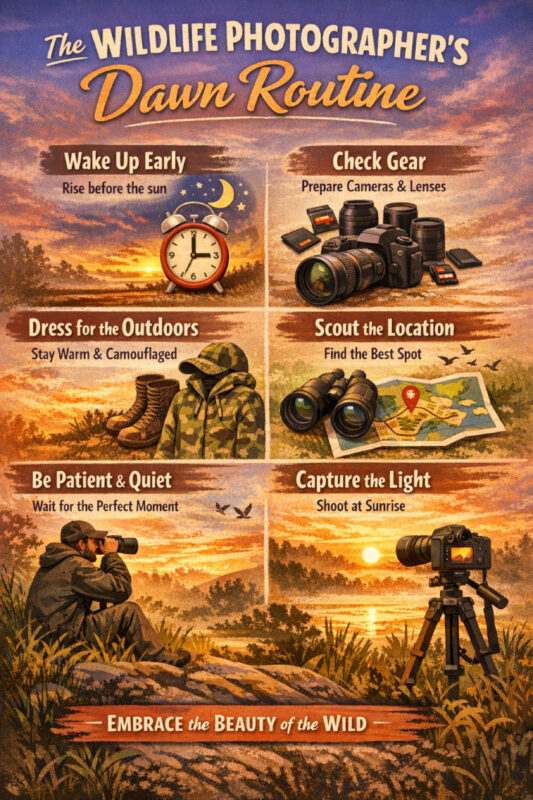
1. Plan Your Dawn Photography Session the Night Before
Most of my success at sunrise happens hours earlier. I make sure everything is ready before I go to sleep so my morning stays calm and quiet.
- Fully charge all batteries and clear or format memory cards.
- Pack essential gear, including camera body, lenses, and accessories.
- Check the weather forecast. Cloudy mornings often bring softer light, while clear skies create stronger contrast.
- Set an early alarm so I arrive well before sunrise, though after years of early mornings I wake up on my own.
2. Prioritize Rest and Fuel for Early Mornings
Fatigue leads to sloppy decisions, especially in low light.
- I get to bed early so I stay alert and focused.
- I hydrate and pack a quiet snack that will not disturb wildlife.
3. Visualize Your Wildlife Photography Goals
Before I ever step into the field, I think through the shoot.
- I consider the species I expect to see.
- I visualize compositions with attention to background, light direction, and framing.
This mental prep helps me move less once I arrive.
Essential Gear for Dawn Wildlife Photography
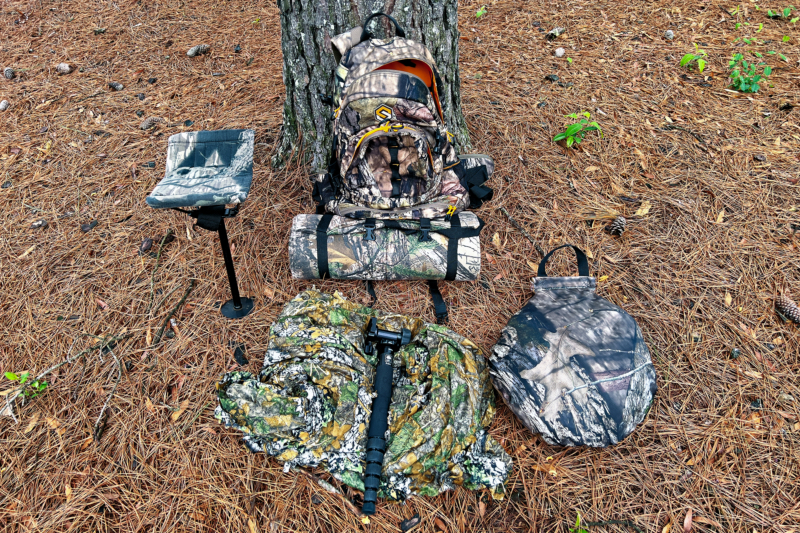
Low light and early movement demand reliability. Every item I bring has a purpose at dawn.
1. Camera Equipment for Early Morning Shoots
- Camera body, such as my Canon EOS R5 Mark II.
- Main telephoto lens like the RF 100-500mm or RF 200-800mm.
- A secondary lens for closer encounters.
- Extra batteries and cleared memory cards.
- Tripod or monopod for added stability.
- Lens cleaning cloth for dew or condensation.
2. Must-Have Accessories for Dawn Photography
Minimizing noise and movement matters before sunrise.
- Camouflage clothing or a cover to blend in.
- Headlamp with a red-light setting to avoid startling wildlife.
- Rain cover for unexpected weather.
- Backpack with easy-access compartments.
3. Personal Items for a Smooth Dawn Shoot
Comfort keeps me still longer.
- Water bottle.
- Small snack.
- Map or GPS.
Scouting Locations for Dawn Wildlife Photography
1. Arrive Early for the Best Wildlife Activity
I aim to arrive 30 to 60 minutes before sunrise. This gives me time to settle in and lets the environment return to normal before animals become active. I shoot in manual with Auto ISO, so being set up early allows me to adjust exposure deliberately instead of reacting once the light starts changing.
The coyote shown at the top of this post, which I photographed shortly after sunrise, is a good example of why this matters. I walked into the area, set up my gear, and waited quietly before dawn. When the coyote yawned, it felt relatable. I was just as tired, but being in position early made the moment possible. I share more about that encounter in my post on photographing coyotes with a little help from vultures.
2. Study Animal Behavior for Better Shots
Understanding behavior helps me choose the right place to wait.
- Deer often graze in open clearings.
- Owls hunt along forest edges.
- Raccoons frequently move near streams.
Knowing these patterns improves positioning long before sunrise.
3. Look for Signs of Wildlife Activity
Tracks, scat, and broken vegetation point to active areas. These clues help narrow down where I should stop and wait.
4. Optimize Lighting and Background at Dawn
Early light changes fast, so I pay attention to both direction and background.
- Backlighting can add drama.
- Front lighting helps reveal detail.
- Clean backgrounds keep attention on the animal.
5. Stay Still and Patient
Once I choose a spot, I stay put. Dawn is peak activity time, and minimizing movement increases my chances. Often, I hear wildlife before I see it, especially in low light. Waiting quietly gives those moments time to unfold.
Good information!