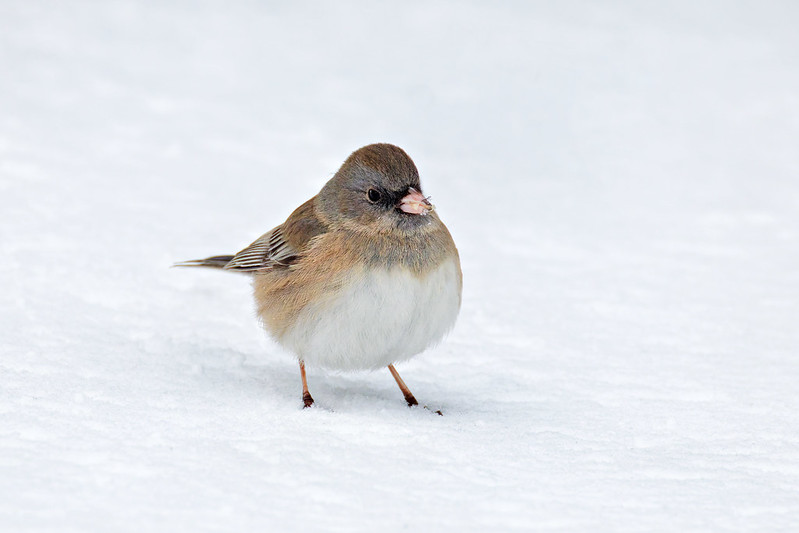
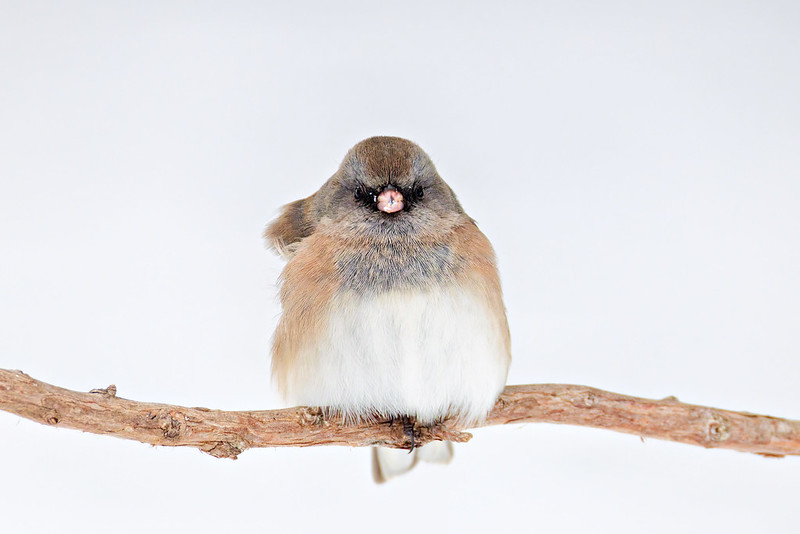
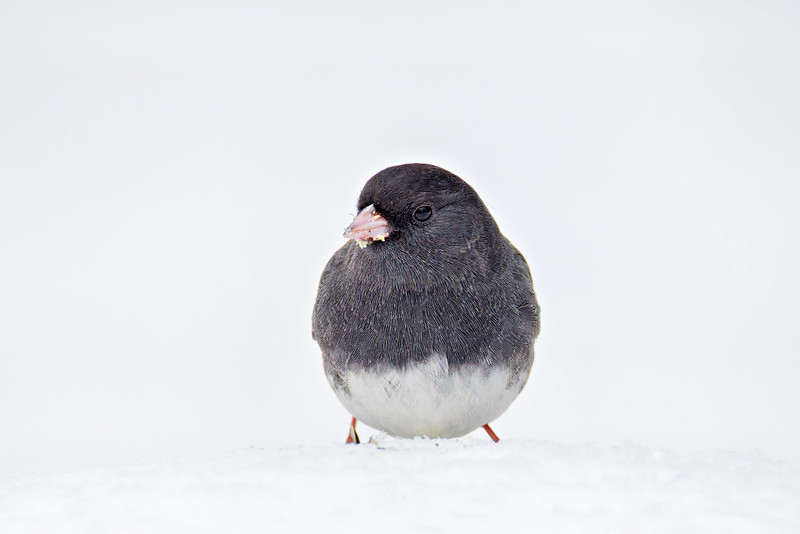
We got our first real snow of the year at my house here in Arkansas over the weekend. It piled up fast, about 6 to 7 inches, and it turned my yard into a white studio.
It’s still bitter cold out there. I’m writing this at my desk at 3 a.m. on Monday, and it’s 4°F right now.
A quick note before the photos
If you’re curious about my full approach to photographing birds in snow, I laid it out here: Photographing Birds in Snow: Ultimate Guide
Wildlife Notes
Dark-eyed juncos love a snowy yard
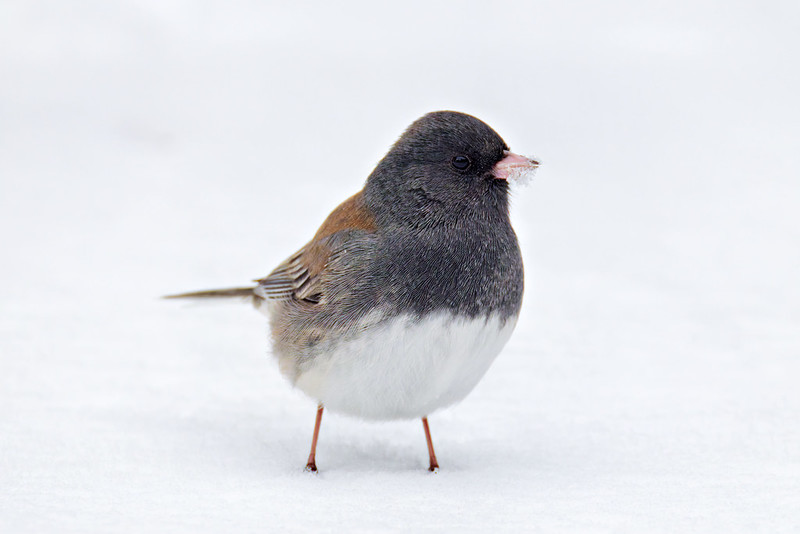
The first birds I focused on were dark-eyed juncos. Around here, they’re the classic “snow birds” that show up when winter means business. When the ground is covered, they spend a lot of time down low, walking and hopping as they hunt for seeds and anything exposed on the surface.
What stood out yesterday was how calm they looked while working the snow. They would pause, fluff up, then go right back to feeding. That puffed-up look is common in cold weather. It helps them trap warm air close to the body.
Ground feeding, quick movement, and constant scanning
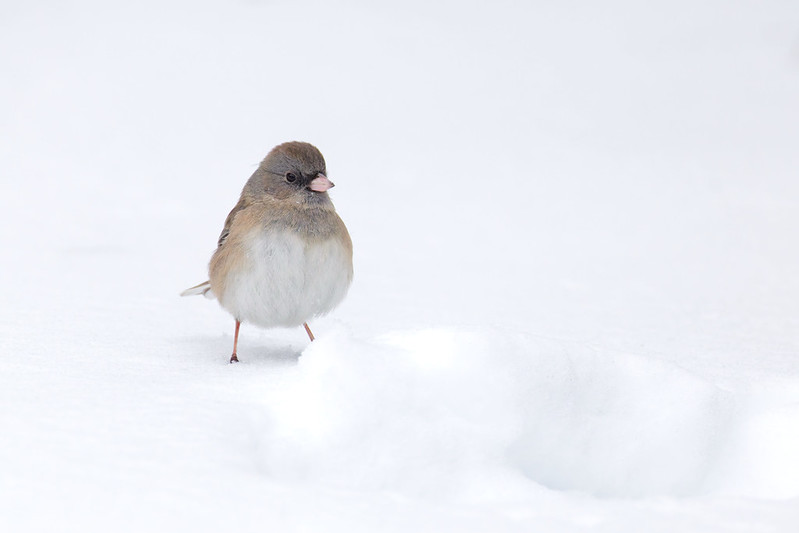
Juncos don’t sit still for long. They’ll grab something fast, shift position, and keep scanning. Even in my yard, they acted alert the whole time. That’s one reason I like photographing them in snow. The clean background makes their shape and posture easy to read, even when they’re moving.
Photography Notes
My deck rail setup
I photographed these from my deck while sitting down, which is about as comfortable as winter wildlife photography gets. I used a beanbag on the deck rail for support, and that’s what made this workable at 800mm. At that focal length, even tiny movement can soften a shot.
Why I leaned into the high-key look
Snow is bright, but your camera still wants to turn it gray. I pushed my exposure to keep the snow looking like snow.
I used +2 exposure compensation, and I watched for clipped highlights. The goal was a clean, bright background without blowing out feather detail on the bird. Dark-eyed juncos are perfect for this because their dark hood and white belly give you contrast, even in flat winter light.
The settings I used for these junco photos
- Camera: Canon EOS R5 Mark II
- Lens: Canon RF 200–800mm F6.3–9 IS USM
- Focal length: 800mm
- Aperture: f/10
- Shutter speed: 1/2500 sec
- ISO: 3200
- Exposure compensation: +2
- Support: Beanbag on deck rail
That shutter speed was there for a reason. Juncos move in short bursts, and I wanted to freeze the tiny head turns and quick steps. The tradeoff is ISO, but I’d rather manage a little noise than lose feather detail to motion blur.
Closing
This was the kind of morning that reminds me why I keep a backyard setup ready. When it’s 4°F and the roads are a mess, I can still do real wildlife photography without leaving home.
And when the first snow hits, the dark-eyed juncos show up like they’ve been waiting on it.