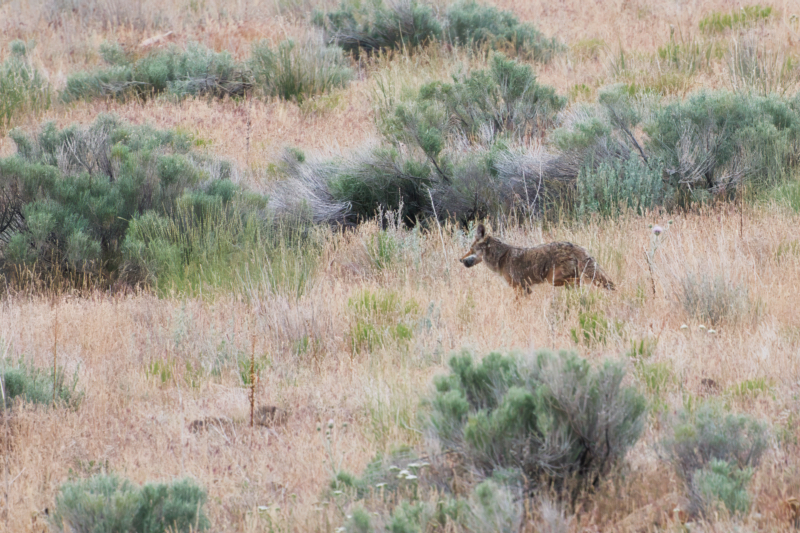
During my recent wildlife photography trip to Antelope Island State Park in Utah, I had the chance to photograph a coyote catching a meal. As I drove off the main road, I spotted movement in the brush. At first, I only saw shadows. Then a coyote stepped into view and began stalking prey in the distance. I quickly grabbed my camera and rested it on the bean bag over my truck window.

A moment later, the coyote slipped behind a low bush and vanished from sight. For several seconds, nothing moved. Then it stepped back into the open with something in its mouth. At that point, I realized I had just watched a successful hunt. The entire sequence happened fast and without warning.
Wildlife Notes: Coyote Hunting Behavior
Coyotes are among the most adaptable predators in North America. They hunt alone most of the time, using a slow stalk and a quick pounce to catch small prey. Their prey list is long and opportunistic. Small rodents, rabbits, birds, and insects are all fair game depending on the season and what is available.
The stalking phase is easy to miss if you are not paying attention. The coyote moves with its head low and body close to the ground. It slows down as it gets closer to the target. Then it freezes. That pause can last a few seconds or much longer.
Antelope Island and Coyote Habitat
Antelope Island sits in the Great Salt Lake and covers about 28,000 acres. The mix of open flats, shrubby cover, and grassland makes it good habitat for coyotes year-round. There is plenty of prey and plenty of ground to cover. I have seen coyotes here at all times of day, though early morning and late afternoon tend to produce the most activity.
A Rewarding Encounter
Watching a coyote hunt is always a good reminder of why I spend so much time in the field. Most of what I photograph involves a lot of waiting for a few seconds of action. This encounter at Antelope Island was exactly that. The timing worked out, the light cooperated, and the coyote did what coyotes do.
If you have not visited Antelope Island, it is worth the trip. The wildlife diversity there is impressive, and the landscape gives you long sightlines that make spotting animals much easier.