I spent a cool May morning watching a Carolina Chickadee feeding its family at a nest box in my yard. This tiny parent flew back and forth with a caterpillar clamped in its beak for the hungry mouths inside.
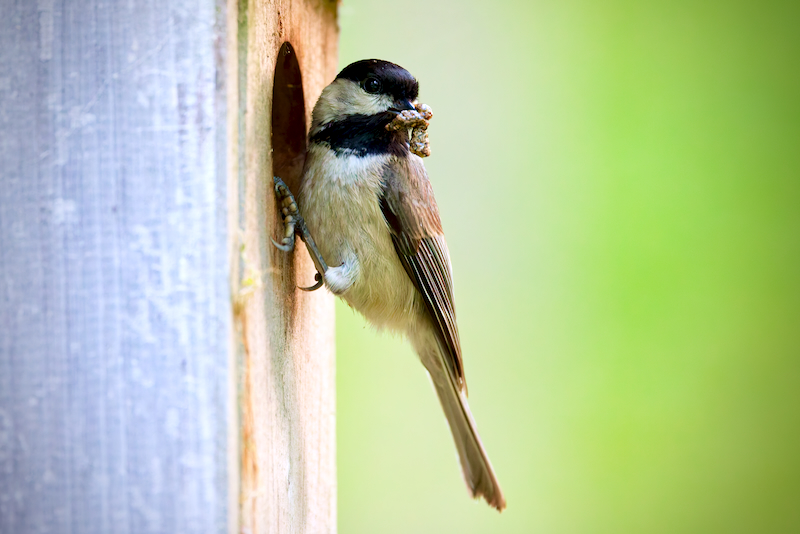
From my place in the Ouachita Mountains of Arkansas, I could hear the soft calls from the box before I ever saw the bird. Once the adult landed on the front board, everything went quiet. For a few seconds it posed there, checking the area, and gave me this look at its breakfast run.
Wildlife Notes: Carolina Chickadee Feeding Its Young
Carolina Chickadees are small songbirds with a black cap, black throat, and white cheeks. The soft brown back and light underparts help them blend into tree trunks and nest boxes. They live year-round across much of the southeastern United States, including the Ouachita Mountains here in Arkansas.
In spring they shift into nesting mode. They use natural cavities or nest boxes, lining them with moss and softer material. Once the chicks hatch, the adults stay busy carrying insects to the nest. Caterpillars are an important food source for growing nestlings. They are soft, easy to swallow, and packed with energy.
That is exactly what you see in this photo. The chickadee clings to the nest box and grips a fat caterpillar in its beak. It pauses just long enough to scan for threats. After that quick check, it slips inside to feed the young and clean up any waste before heading out again for another trip.
I photographed this on May 7, 2022 at 7:03 a.m., near the Ouachita National Forest. That early hour is a busy time around an active nest. The air is cooler, insect activity is picking up, and the light is soft and low. It is a good time to watch parents move in a steady rhythm between the woods and the box.
If you keep nest boxes in your own yard, this is the kind of action you might see once the eggs hatch. The adults may seem nervous at first if you are nearby. Giving them some space and staying still helps them settle into their routine.
Photography Notes: Photographing A Carolina Chickadee At The Nest Box
For this shot I used my regular bird setup:
- Camera: Canon EOS R5
- Lens: RF 100–500mm F4.5–7.1 L IS USM
- Exposure Mode: Manual
- Aperture: f/7.1
- Shutter Speed: 1/200 sec
- ISO: 8000 (Auto)
- Exposure Compensation: +0.7
- Focal Length: 500mm
- Location: Near the Ouachita National Forest, Arkansas
- Date & Time: May 7, 2022, 07:03 a.m.
I worked from a comfortable distance so the bird could still use the box naturally. The 500mm focal length let me fill the frame without crowding the nest. I focused on the chickadee’s eye, then waited for a moment when the head angle showed the bird and caterpillar clearly.
The light was low, so I opened up to f/7.1 on the long end of the lens and let the ISO float. That pushed the ISO up to 8000, but the Canon R5 handles that level of noise well. A slower shutter speed of 1/200 second was enough, since the bird paused at the entrance before slipping into the box. The brief pause kept motion blur under control.
I also used positive exposure compensation. The nest box and bright background could fool the meter and make the bird too dark. Adding +0.7 helped bring detail into the black cap and throat while keeping the pale cheeks from blowing out.
If you want to photograph chickadees or bluebirds at nest boxes, pick a spot where the entrance is in open shade or soft early light. Set up before the birds arrive or while they are away on a feeding run. Once you are in place, stay still and quiet so they can return to their routine.
Wrapping Up
Watching this Carolina Chickadee feeding its family was a good reminder of how much work goes into raising young. The bird in this photo may make dozens of trips like this in a single day.
If you have nest boxes in your yard, keep an eye out for similar scenes. You might be surprised at what you see when you slow down and watch for a while.