A few weeks ago, a Brown Thrasher started working the edges of my yard again. I grabbed my camera and settled in on the deck to watch. These birds put on quite a show.
Last year I wrote a full post on my first close encounter with one of these birds. If you want the background on identification and habitat, that one is worth a read: Brown Thrasher: A Visitor in My Arkansas Yard. This post picks up where that left off.
Brown Thrasher Behavior: What I’ve Been Watching
One of the first things people get wrong about Brown Thrashers is assuming they’re seasonal visitors. They’re not. In Arkansas, Brown Thrashers are year-round residents. They don’t head south for the winter.
You’ll find them in thickets, brushy tangles, overgrown fence rows, and suburban yards with dense shrubs. My property fits that description, so I’ve got a reliable pair working the area on most days.

What I enjoy most about watching these birds is the foraging. They move through low cover methodically, kicking through leaf litter and probing for prey. The shot above caught one carrying a beetle it had just turned up. A few days later, I got one with a spider. They’re not picky. Insects, spiders, berries, and small invertebrates all go on the menu.
Spring is peak singing season, and the song is worth stopping for. Brown Thrashers are mimics. They tend to repeat phrases in pairs, which is one way to separate them from Northern Mockingbirds, which usually cycle through phrases in sets of three or more. Even outside of breeding season, you’ll hear them calling from the brush.
The rufous brown upperparts and heavily streaked breast make them easy to pick out once you know what to look for. The long tail and bright yellow eye are the other giveaways.
Photography Notes

The spider image was shot at the long end of the RF 100-500mm. The birds have gotten used to me being out there, but I still needed the reach to keep the frame full without pushing them off.
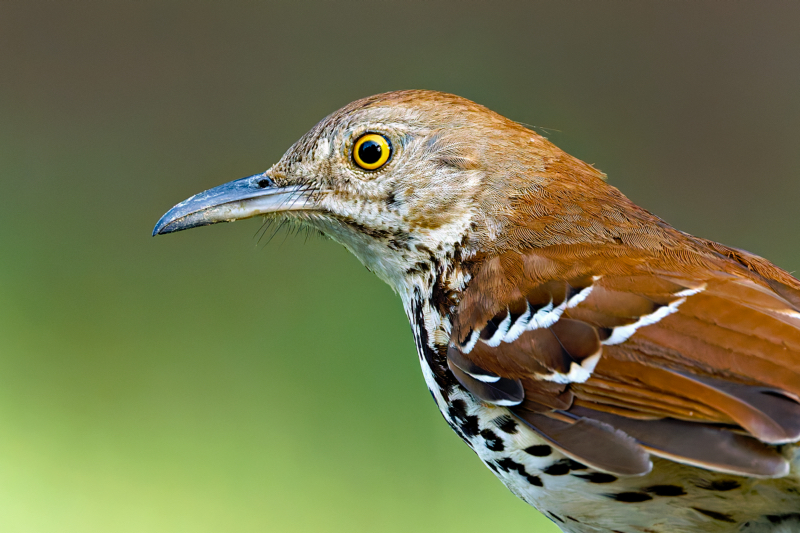
The close profile shot came from the bird landing on a branch just off the rail. At 500mm from deck distance, I had to work fast. The eye is sharp and the breast streaking reads clearly, which is what you want from a bird this close.
Camera settings for the close-up:
- Camera: Canon EOS R5
- Lens: Canon RF 100-500mm F4.5-7.1 L IS USM
- Focal length: 500mm
- Aperture: f/8
- Shutter speed: 1/1000s
- ISO: 4000
- Exposure compensation: 0
- Support: Beanbag on deck rail
ISO 4000 is higher than I’d like, but 1/1000s was the right call to freeze the bird cleanly. The R5 holds up well at that sensitivity.

This Brown Thrasher in Arkansas is a reliable part of my yard now, and I’m glad for it. If you haven’t spotted one near your place yet, start checking the brushy edges. They’re year-round residents, and they’re not hiding.
That is another different bird for me to see and learn about. Thanks for the post.
I am new to bird watching here in my Central AR yard. I do so appreciate your insight into all these little jewels and their habits. I’m learning about The patterns of the downy woodpecker fledglings, their feeding habits, when they leave the nest, the parents taking care of them, etc. Now with the brown thrashers showing up this week, and so many other things you report help me learn so much!
Awesome! Thanks for taking the time to read my blog.
Lovely images Steve they are wonderful to see enjoy them in your yard.
Thank you!