I was watching Bonaparte’s Gull feeding behavior below Robert S. Kerr Lock and Dam when this moment unfolded. One gull lifted off with a small fish, dropped it into the water, then dropped straight down and retrieved it from the water before it drifted away.
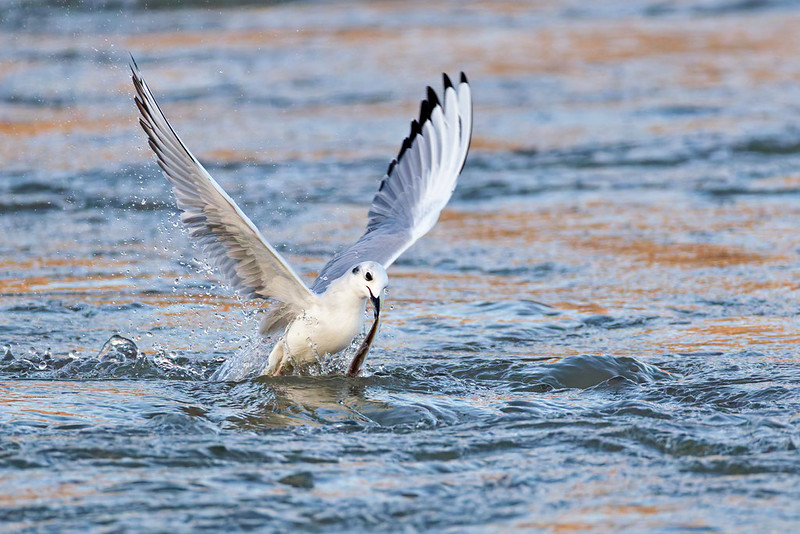
Moments like this happen fast. If you blink, you miss the whole story.
I climbed down over the boulders to get close to the water’s edge and shot this sequence hand-held. From that low angle, I could see every adjustment the gull made once the fish slipped free.
Bonaparte’s Gull Feeding Behavior in Action
Bonaparte’s Gulls are quick and efficient feeders, but even experienced birds lose their grip sometimes. Fish can twist. Bills can slip. Water resistance adds chaos during lift-off.
What stood out here was the reaction time.
As soon as the fish dropped, the gull adjusted its wing position and body angle. Instead of continuing forward, the gull dropped straight down toward the fish as soon as it hit the water. That quick reaction kept the fish within reach and prevented it from sinking or drifting downstream.
Dropping prey does not always mean failure. In many cases, it is part of the process. Gulls often reposition prey mid-air or briefly release it to improve their grip. This sequence shows how precise their control really is.
Bonaparte’s Gulls rely on speed and adaptability when feeding, and this moment fits well with their varied diet and feeding strategies.
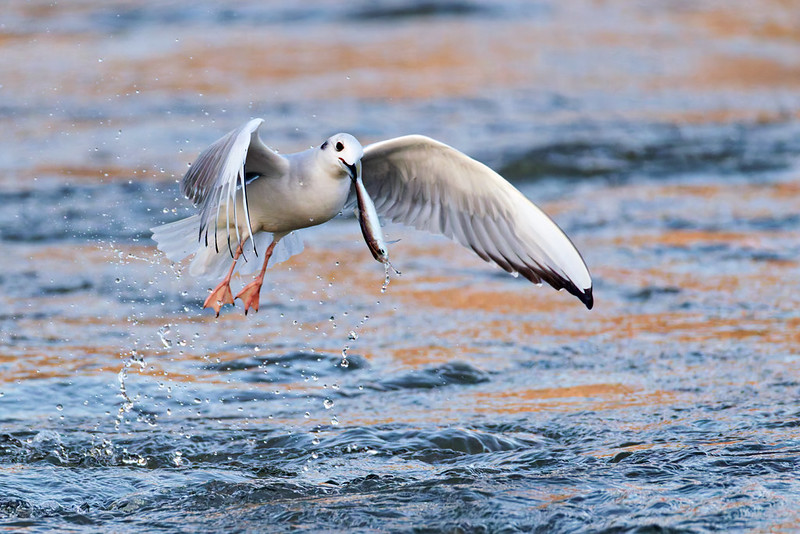
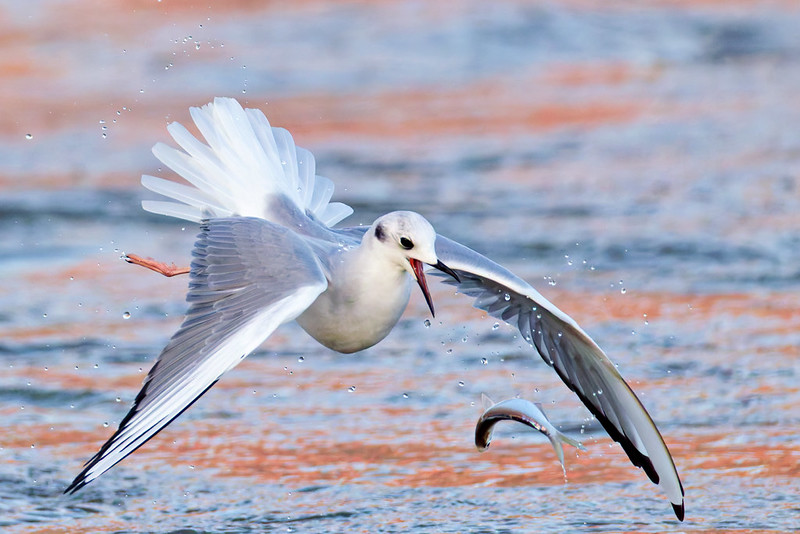
The recovery happened in seconds. The gull reclaimed the fish cleanly and continued flying as if nothing had gone wrong.

Photography Notes
I shot this sequence hand-held from the water’s edge after climbing down over the rocks. That lower perspective helped isolate the bird against the water and made the action easier to follow through the viewfinder.
Tracking was critical. I stayed locked on the bird rather than the fish. Once the gull reacted, the rest of the sequence fell into place naturally.
Fast shutter speed mattered here. Wing position, splash, and the falling fish all needed to be frozen cleanly. At 800 mm, even small movements are exaggerated, so stability and follow-through were important.
Image Information
- Camera: Canon EOS R5 Mark II
- Lens: Canon RF 200-800mm F6.3-9 IS USM
- Aperture: f/9
- Shutter Speed: 1/3200 second
- ISO: 6400
- Focal Length: 800 mm
- Exposure Compensation: +1/3
Final Thoughts
This was a short sequence, but it revealed a lot about how Bonaparte’s Gulls handle mistakes in real time. Speed, balance, and awareness all came together in just a few seconds.
These are the moments I look for. Not perfection, but how wildlife adapts when things do not go exactly as planned.
I feel like I’m right there with you when I look at his sequence!
Really good work, Steve!
Thank you!