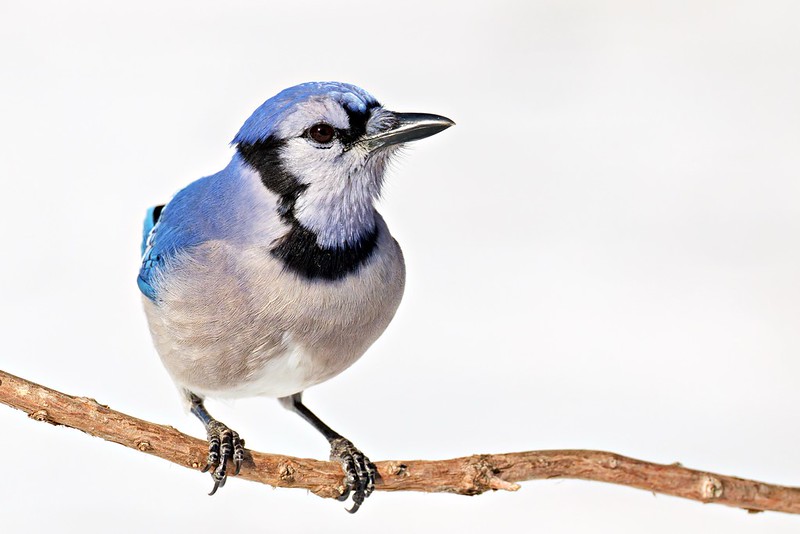
A fresh snow makes my yard feel quieter, even though the feeders stay busy. This Blue Jay caught my attention once it showed up, moving with purpose and never sitting still for long.
Wildlife Notes
In winter, Blue Jays can be regulars around a yard, especially when easy food is available. They are famous for caching, which means they will carry food off and tuck it away for later. On snowy days, that habit makes a lot of sense. When the ground is covered, a quick grab-and-go is often safer than lingering in the open.
I also pay attention to how jays use perches after a snow. They often pick a higher spot first, pause, and watch. It feels like a quick safety check before they drop in closer to feeders or the ground. In my yard, that “scan first, move second” pattern shows up a lot on bright winter mornings.
Snow changes the soundscape too. Jays still call, but it can feel sharper in the cold air and carry farther in a quiet neighborhood. Even when I cannot see one yet, I often know it is nearby just from the noise and the way other birds react.
If you have been following this stretch of backyard snow birds, this Blue Jay fits right into the same week of winter yard activity. Here are the related posts from the same run:
- Male Northern Cardinal in Fresh Snow in My Arkansas Yard
- Female Northern Cardinal in Fresh Snow, Arkansas Yard
- Harris’s Sparrow Feeding in Fresh Arkansas Snow
- American Goldfinch at My Feeder After Arkansas Snow
- Dark-eyed Juncos in the First Snow (Arkansas Yard)
- Red-bellied Woodpecker on Suet After an Arkansas Snow
- Downy Woodpecker on a Suet Log After an Arkansas Snow
- Female Red-winged Blackbird After Snow in My Arkansas Yard
Photography Notes
This was a good setup for a clean winter look. Snow can act like a natural backdrop if you expose it on purpose. If you let the camera underexpose, snow turns gray fast. I used a positive exposure compensation to keep the background bright and still hold detail on the bird.
Photo 1 settings (provided):
- Camera: Canon EOS R5 Mark II
- Lens: Canon RF 200–800mm F6.3–9 IS USM
- Focal length: 800mm
- Aperture: f/10
- Shutter speed: 1/2500 second
- ISO: 1000
- Exposure compensation: +1
- Support: Beanbag on deck rail
At 800mm, the beanbag support is the difference between “almost sharp” and “sharp.” It steadies the lens and keeps framing consistent while I wait for a clean head angle. The fast shutter speed also helped with little posture shifts and quick movements.
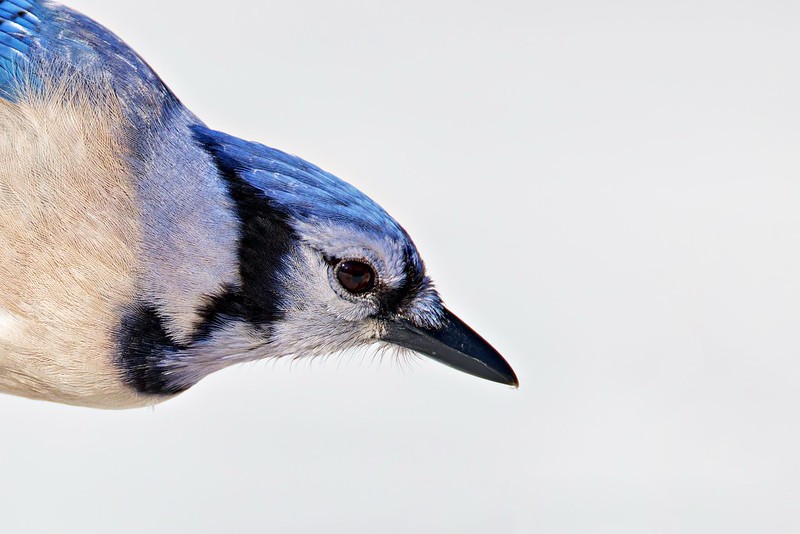
The tight head shot is about detail and mood. The perch photo tells the winter-yard story. I like pairing them because it adds variety without losing the thread of the moment.
Settings for the second photo are available on request.
Closing
Snow does not stop backyard activity here, it just changes the patterns. This Blue Jay was a good reminder of that, quick, watchful, and always moving with a purpose.