Bird reflection photography is one of my favorite ways to photograph birds. A clean reflection adds balance, context, and visual interest to an image. It can be challenging, but with the right conditions and a little patience, it is very achievable.
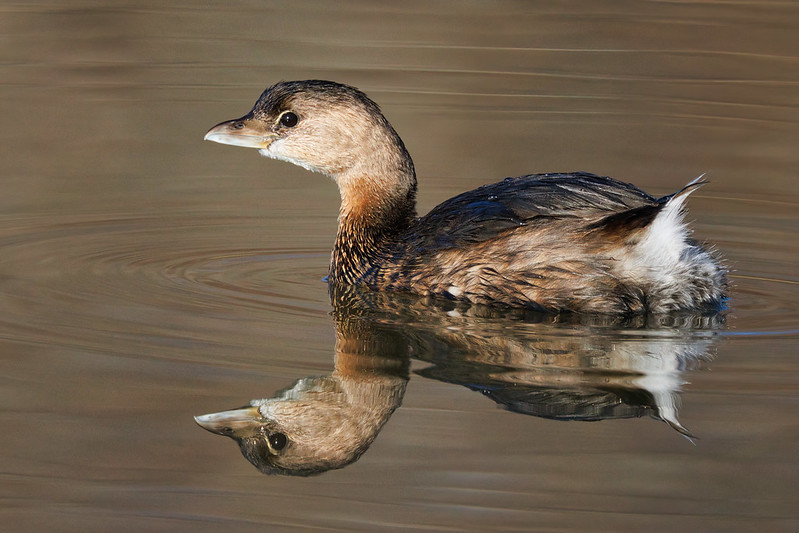
I spend a lot of time around lakes, ponds, and calm river edges looking for birds close to the water. When everything lines up, the reflection often tells as much of the story as the bird itself.
For a deeper look at techniques that apply across species, I also share a more detailed guide on wildlife reflection photography and how to capture strong reflections consistently.
Find Calm Water for Bird Reflections
The most important factor in bird reflection photography is still water. Ripples and waves break up reflections fast. I look for sheltered ponds, quiet coves, or slow-moving backwaters where wind has less impact.
Early mornings usually work best. Wind tends to be lighter, and the water surface is often glassy. I avoid shooting reflections during heavy wind or rain since the surface rarely settles enough for clean results.
Get Low to Strengthen the Reflection
Camera height makes a big difference. The lower I get to the water, the stronger and more complete the reflection becomes. Kneeling, sitting, or shooting right from the shoreline helps reduce the angle between the lens and the reflection.
This approach also simplifies the background and keeps the viewer’s eye focused on the bird and its mirrored shape.
Stabilize the Camera
Sharp reflections depend on sharp images. I want my camera as stable as possible, especially in low light near sunrise. I often use a tripod or a beanbag, depending on the situation.
Stability allows me to fine-tune composition and wait for the right moment without rushing the shot.
Use Shutter Speed Creatively
Shutter speed controls how the water looks. Faster shutter speeds freeze small ripples and keep the reflection crisp. Slower speeds soften movement and can create a more abstract look.
I experiment in the field and adjust based on conditions. There is no single correct setting. The scene usually tells me what works best.
Choose Lenses That Handle Low Light
A lens with a wide maximum aperture helps in bird reflection photography. It allows me to keep ISO lower in dim light and separate the bird from the background when needed.
I avoid using flash around birds near water. Natural light keeps behavior natural and avoids disturbing the scene.
Watch the Background Carefully
The reflection includes everything above the waterline. A cluttered background will show up twice. I look for clean shorelines, darker banks, or distant vegetation that does not distract from the subject.
Simple backgrounds make reflections stronger and easier to read.
Shoot During the Best Light
Early morning and late evening offer the best light for reflections. Soft angles, warm tones, and lower contrast all help reflections stand out.
I plan reflection shots around these times whenever possible and stay patient. Calm conditions do not last long.
Final Thoughts on Bird Reflection Photography
Bird reflection photography rewards patience and attention to detail. When water, light, and positioning come together, the results can be striking.
I never force reflection shots. I watch the conditions, wait for the moment, and let the scene develop naturally. Over time, those moments add up to some of my favorite images.