
Bald eagle flight behavior shows how efficient and powerful these birds are once they leave the ground. I have spent years photographing bald eagles in flight, and watching how they soar, glide, and dive has given me a real appreciation for how purpose-driven their movements are. Every wingbeat and turn serves a reason tied to hunting, travel, or interaction with other eagles.
Bald eagles combine size, strength, and smart use of air currents to stay airborne with very little wasted energy.

Wingspan and Soaring in Bald Eagle Flight Behavior
One of the most obvious traits in bald eagle flight behavior is their wingspan. Bald eagles can reach wingspans of up to seven and a half feet. That wide span allows them to soar for long periods without flapping their wings.
When conditions are right, bald eagles rely on thermal air currents to gain altitude. I often see them circle slowly as they climb, barely moving their wings. This technique lets them cover large areas while conserving energy.
Speed and Diving Techniques
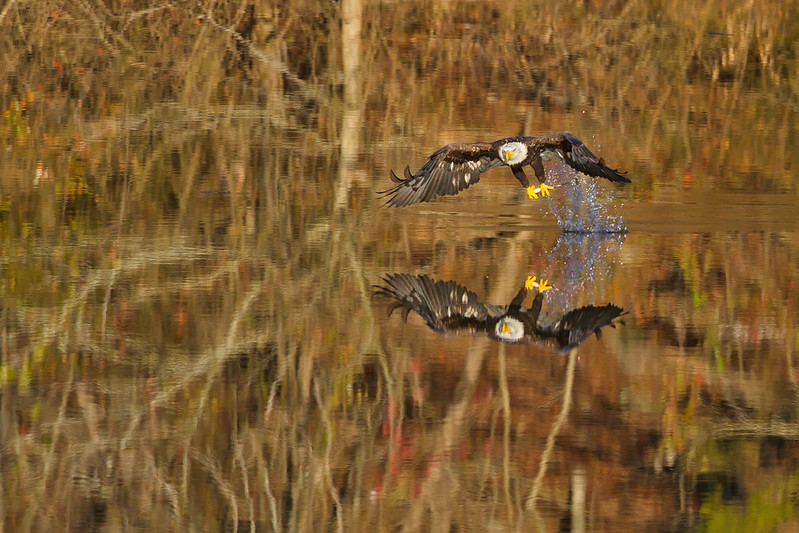
Speed plays an important role in bald eagle flight behavior, especially during hunting. In normal flight, bald eagles travel around 30 to 40 miles per hour. During a hunting dive, their speed can approach 100 miles per hour.
I have watched bald eagles commit to a dive with precision rather than aggression. They angle their wings, control their descent, and strike the water at just the right moment. Accuracy matters more than speed alone when catching fish.
If you want a deeper look at camera settings and timing for fast-moving subjects, I cover that in more detail in my guide to birds in flight photography techniques.
Gliding and Long-Distance Travel
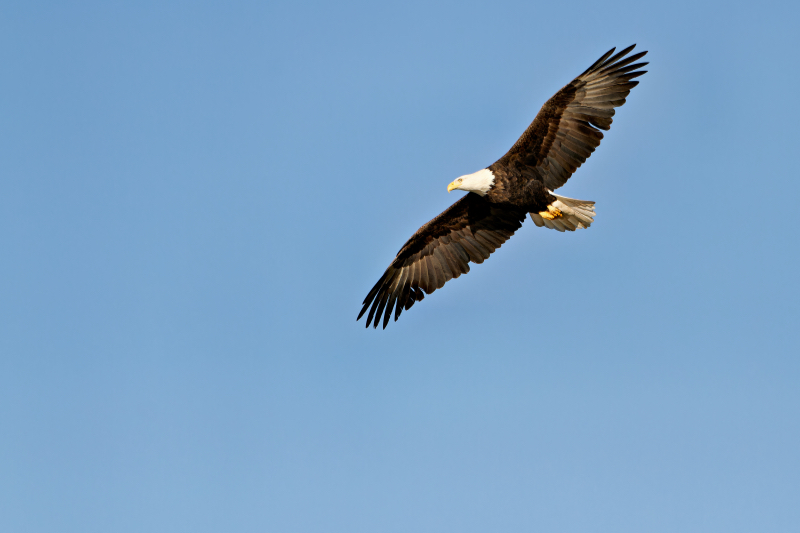
Gliding is a key part of bald eagle flight behavior. Their broad wings and solid body structure allow them to travel long distances with minimal effort. During migration, bald eagles may cover thousands of miles over the course of a season.
They plan these journeys around wind and weather patterns. By using favorable conditions, eagles reduce the energy needed to stay airborne for extended periods.
Aerial Agility and In-Flight Maneuvers
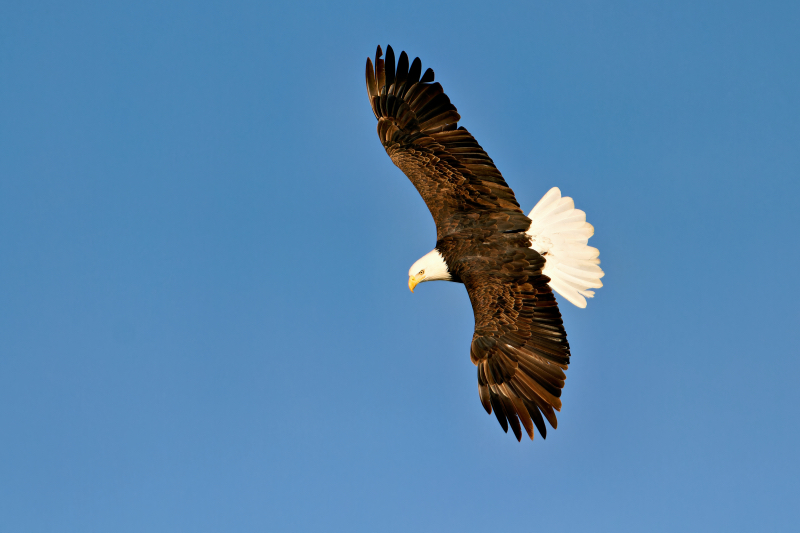
Although bald eagles are large birds, their flight behavior includes a surprising level of agility. During courtship displays or territorial encounters, I have seen eagles make sharp turns, short dives, and sudden climbs.
These movements are not random. They help establish dominance, communicate intent, and maintain control of airspace near nests or feeding areas.
Additional Bald Eagle Flight Behavior Facts
- Bald eagles can migrate more than 3,000 miles in a single season.
- They sense subtle changes in air pressure to locate rising air currents.
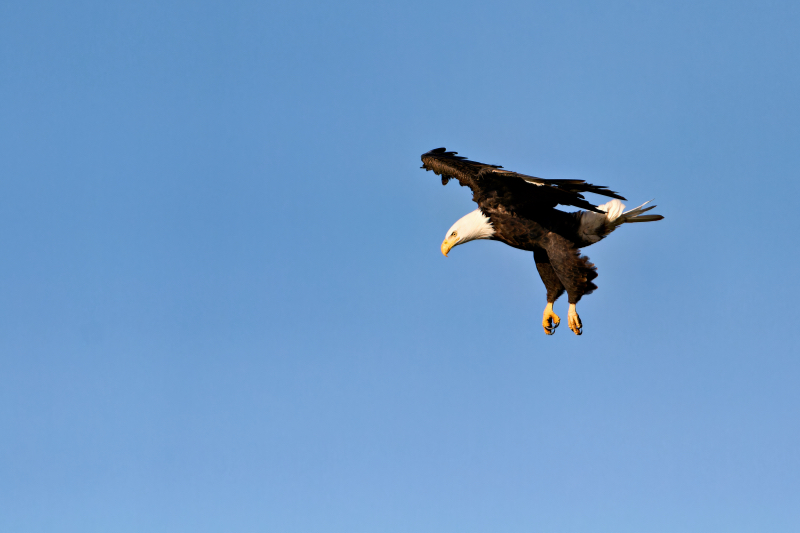
- Their eyesight allows them to spot prey from long distances while flying.
- Vocal calls are often heard during flight near nesting or feeding areas.
Spending time observing bald eagle flight behavior has given me a deeper respect for how well adapted these birds are to life in the air. Every glide, dive, and turn reflects experience layered on top of instinct.
Photographing bald eagles in flight remains one of the most rewarding parts of my time in the field.