Activity at my hummingbird feeders here in Arkansas is starting to slow down. I still see a few Ruby-throated Hummingbirds, but the busy summer crowds are thinning.
Arkansas hummingbird migration is already underway by late August. The quieter feeders are one sign that the season is changing.
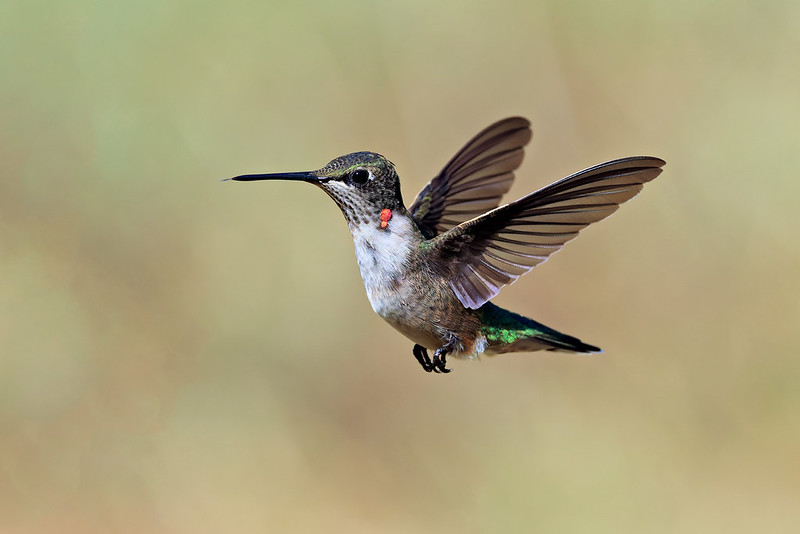
Arkansas Hummingbird Migration Is Already Underway
Ruby-throated Hummingbirds do not all leave at once. Some adult males begin moving south before females and young birds.
The birds passing through my yard may also include migrants from farther north. They can stop briefly to rest and replace energy before continuing south.
Shorter days provide one of the strongest signals that it is time to migrate. According to the Cornell Lab of Ornithology, keeping feeders available does not prevent hummingbirds from leaving.
A quieter feeder does not prove that every bird has left the area. Food supplies and territorial behavior can also change what I see. However, the timing fits their normal fall movement.
Last year, the final hummingbird I recorded appeared on October 10. I wrote about that sighting in The Last Hummingbird: October 10 in Arkansas.
Drought and Heat Change the Feeding Picture
Arkansas is experiencing terrible drought and extreme heat this year. Those conditions do not cancel the birds’ urge to migrate, but they may make finding food more difficult.
Drought-stressed plants can produce fewer flowers. Dry conditions can also change where hummingbirds find the tiny insects and spiders they need.
Reliable feeders may become more important when natural nectar sources fade. Birds may gather around watered yards, shaded areas, creek bottoms, and other places that still offer food.
Individual birds may remain at a productive stopover while they rebuild their energy. One study of Ruby-throated Hummingbirds during fall migration documented stopovers ranging from one to 15 days.
The bird in my photo appears to be a young male. A few scattered red gorget feathers are beginning to show on its throat.
Keeping Nectar Ready for Late Travelers
I plan to keep my feeders filled for the late travelers passing through Arkansas. They may need a dependable food source during this hot, dry fall migration.
Extreme heat also makes feeder care especially important. Sugar water can spoil much faster in hot weather.
Audubon recommends emptying and cleaning feeders daily or every other day during hot conditions. I can also use smaller amounts of nectar to reduce waste while activity slows.
I will continue watching for visitors into October. Last year’s October 10 sighting showed me that a few hummingbirds may still pass through long after the summer crowds disappear.