
Today I want to share some photos of American White Pelicans in flight over Sally Jones Lake in Oklahoma’s Sequoyah National Wildlife Refuge. Over the past few days, my blog posts have focused on these pelicans as they swam along the shores of this quiet lake (An American White Pelican in Action and American White Pelican’s Unexpected Pastime ). But today’s post features them taking to the skies with their huge wingspans, capturing their grace and beauty aloft.

Wingspan and Size of the American White Pelican
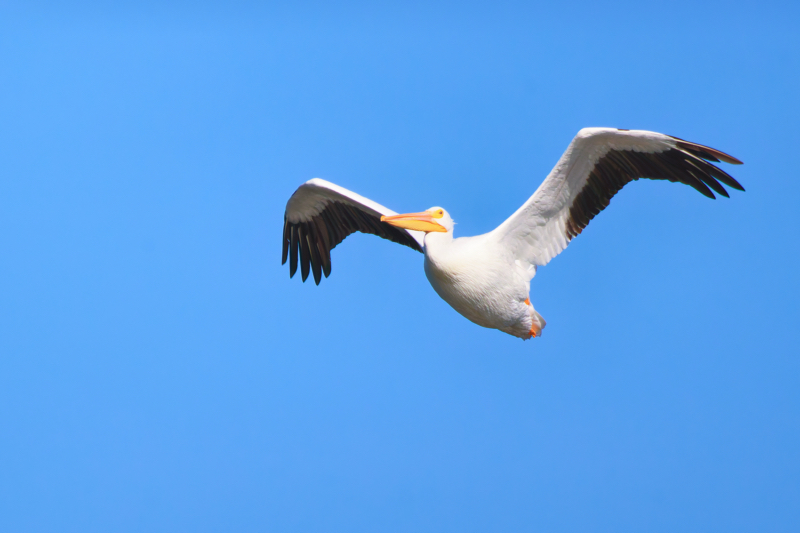
American White Pelicans are among the largest birds in North America. In fact, their wingspans can reach nearly nine feet from tip to tip. When fully extended, their broad wings give them a powerful yet calm presence in the sky. Even so, their flight looks almost effortless.
Why American White Pelicans Fly in Formation
I photographed these pelicans as they lifted off from the lake and settled into long glides. Often, they fly in straight lines or loose V-shaped formations. Once airborne, they alternate between flapping and gliding. On windy days, they also ride warm air currents with very little effort.

Following a Single Pelican in Flight
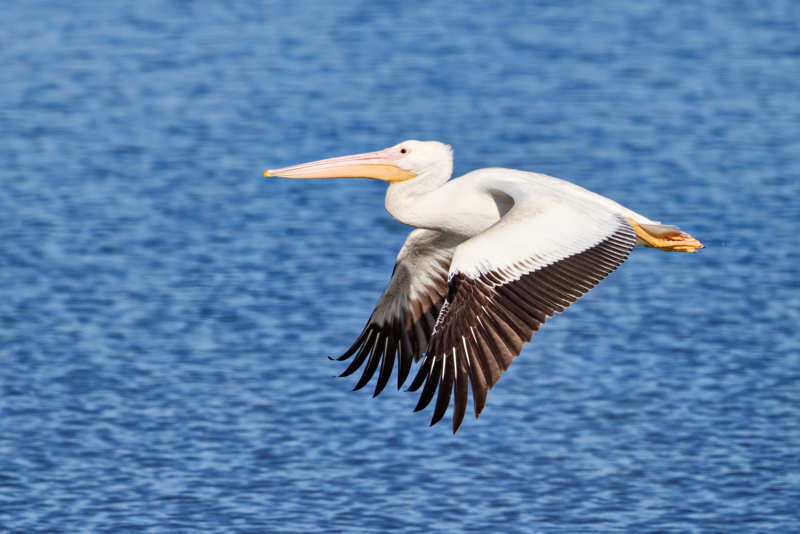
At one point, I locked onto a single pelican as it climbed away from the lake. Slowly, I followed it with my camera as it drifted alone on the wind. Later on, I captured a small group of three pelicans flying low over the water in tight formation as they came in to land.
The Grace of American White Pelican Flight Over Water
What stands out most to me is their coordination in the air. With each pass, every bird seems to match the timing of the one ahead of it. From the shoreline, watching that long line of white bodies and black wing tips move in rhythm is almost hypnotic.
In the end, capturing these moments reminded me just how powerful and elegant these birds are. Whether soaring high above the lake or gliding inches above the surface, American White Pelicans never lose their sense of calm control in flight.
Image Information: (Last Image)
- Date: 11/28/23
- Time: 11:59 AM
- Camera: Canon EOS R5
- Lens: RF 100-500mm F4.5-7.1 L IS USM
- ISO: 400
- Aperture: 8
- Shutter: 1/2000
- Exposure Compensation: -0.3
- Lens (mm): 500