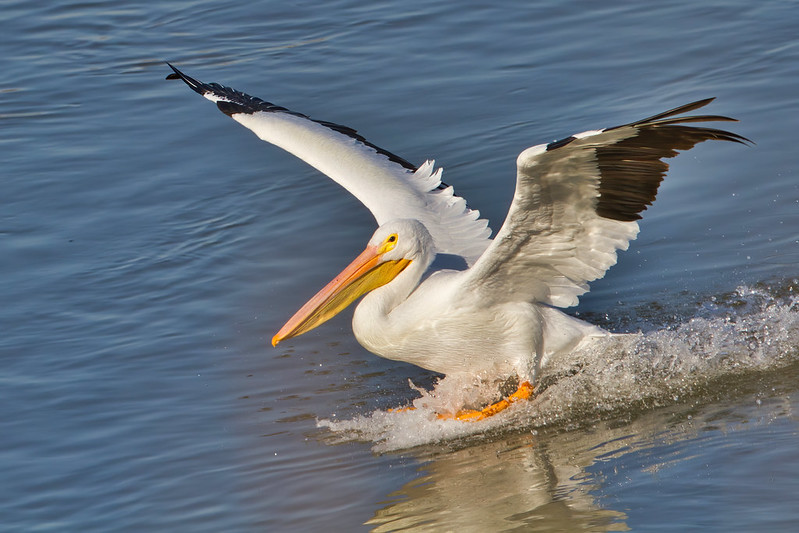
I was photographing American White Pelicans near the Robert S. Kerr Lock and Dam in Oklahoma when this bird came in low over the Arkansas River. The pelican flared its wings at the last second and skimmed across the water before settling in. I had my camera ready and captured the moment just as its feet touched down.
I was sitting on the rocks along the south side of the river with my camera mounted on a tripod. The pelicans were using the current below the dam to feed, which meant frequent landings and takeoffs. That gave me plenty of chances to watch their approach and time my shots.my camera and lens on a tripod.
Wildlife Notes
American White Pelicans are large, heavy birds, but their landings are surprisingly controlled. As they approach the water, they slow down by spreading their wings wide and lowering their feet. Instead of dropping straight down, they often slide across the surface until they lose enough speed to settle in.
At dams and tailwaters, pelicans take advantage of fish concentrated by current and turbulence. This leads to repeated short flights as birds reposition themselves. Watching these patterns helps predict when a landing is about to happen, especially when a pelican lines up into the wind and lowers its feet early.
Photography Notes
For landing shots, I stay locked on the bird early and keep tracking through the entire approach. Pelicans are large, but their wing movement changes quickly as they flare, so fast shutter speeds matter.
I was shooting in aperture priority and let the camera handle shutter speed as the light changed off the water. Sitting low helped keep the background clean and gave the image a more level perspective.
Gear Used
- Camera: Canon EOS 7D
- Lens: Canon EF 500mm f/4L IS
Image Information
- Location: Robert S. Kerr Lock and Dam, Oklahoma
- Date and Time: December 9, 2011, 10:30 a.m.
- Mode: Aperture Priority
- Aperture: f/8
- Shutter Speed: 1/2000 sec
- ISO: 320
- Exposure Compensation: 0
- Focal Length: 500mm