The first snow of the year hit my place in Arkansas over the weekend and left about 6 to 7 inches on the ground. Sunday I stayed on my deck and photographed the birds coming to my feeders.
I shared the first set of photos from that snowy morning here: Dark-eyed Juncos First Snow Arkansas Yard
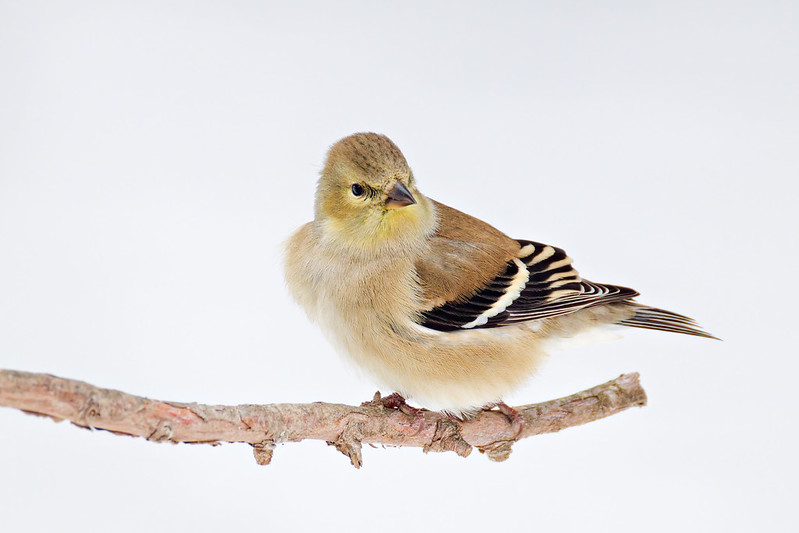
American Goldfinch in Winter Plumage
A winter goldfinch looks different than most people expect
After the juncos, the next bird that caught my eye was an American goldfinch coming in to feed. A lot of folks picture a bright yellow bird, but winter goldfinches are usually much more muted. The softer tan tones and the bold wing markings are what stand out, especially against fresh snow.

Goldfinches are reliable feeder birds when food is consistent. They tend to come in quickly, grab what they need, and move off fast. In weather like this, those short visits feel even more purposeful.
Photographing Goldfinches in Snow
High-key snow and a fast shutter
Snow can fool your camera into underexposing, which turns the background gray. I kept my exposure pushed so the snow stayed bright and clean, while still holding feather detail.
I also stayed with a fast shutter speed. Even when a small bird looks calm, it’s making tiny movements nonstop. At 800mm, I want those head turns and posture shifts to stay sharp.
Image Information
- Camera: Canon EOS R5 Mark II
- Lens: Canon RF 200–800mm F6.3–9 IS USM
- Focal length: 800mm
- Aperture: f/10
- Shutter speed: 1/2500 second
- ISO: 5000
- Exposure compensation: +2
- Support: Beanbag on deck rail
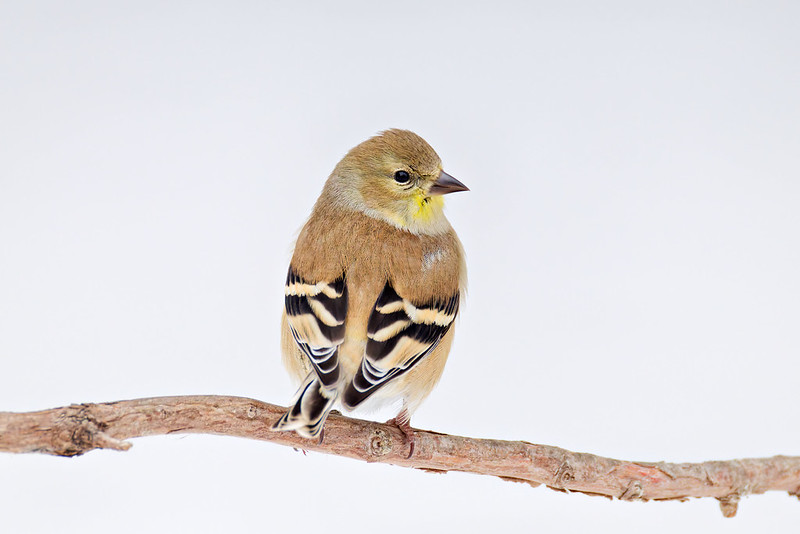
This is why I like photographing feeder birds in fresh snow. The background cleans up fast, and a common backyard bird turns into a simple winter portrait. All I have to do is stay ready and let the birds come to me.