A young Yellow-crowned Night-Heron gave me a good laugh after catching crawdads.
I photographed this bird on August 1, 2013, at Sequoyah National Wildlife Refuge in Oklahoma. The heron had finished feeding, then moved into a stretch that made the moment even better.
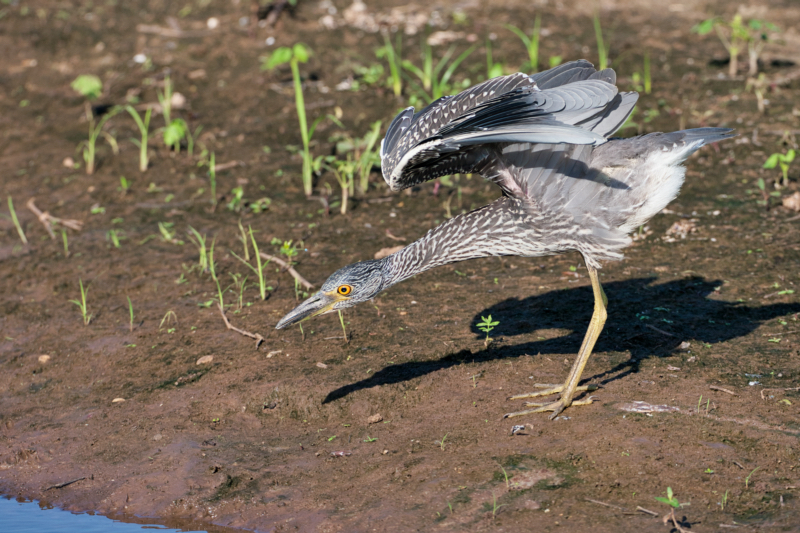
Yellow-crowned Night-Heron Stretching After Catching Crawdads
The first photo shows the young heron bent forward with both wings stretched behind it.
It looked like it was getting ready for takeoff. It also reminded me of a diver leaning toward the water. The pose had a funny look, but it also showed the bird’s grace.
This Yellow-crowned Night-Heron had been catching crawdads before I made these photos. After feeding, it paused along the water’s edge and went through a short stretching routine.
I enjoy photographing behavior like this because it adds life to a bird portrait. A bird standing still can make a strong image, but a stretch tells more of the story.
I have photographed other small moments with this species too, including this look at a Yellow-crowned Night-Heron scratching. These quick behaviors are easy to miss, but they often make the most memorable images.

A Young Heron’s Balance Along the Water’s Edge
The second photo shows a different stretch.
The heron stood tall and extended one wing and one leg behind it. That pose showed off its balance and flexibility.
This frame has a little more character for me. The bird looks calm, but the stretched leg and wing make the scene feel active. It is one of those poses that seems simple at first, then gets better the longer I look at it.
Yellow-crowned Night-Herons spend time around ponds, marshes, and other wet edges. This one was working the edge of the refuge, where crawdads were part of the scene that morning.
Moments like this are one reason I keep watching after the feeding action slows down. A bird may stop hunting, but it may still preen, stretch, scratch, or shift position in a way that makes a better photograph.
Photographing This Stretch at Sequoyah NWR
I photographed this young Yellow-crowned Night-Heron at 8:56 a.m.
The light was good enough to use a fast shutter speed. That helped freeze the stretch and hold detail in the feathers.
The first photo was made with this setup:
- Camera: Canon EOS-1D Mark III
- Lens: Canon EF 500mm f/4L IS USM
- Location: Sequoyah National Wildlife Refuge, Oklahoma
- Date and time: August 1, 2013, 8:56 a.m.
- Exposure mode: AV
- Aperture: f/6.3
- Shutter speed: 1/1600
- ISO: 320
- Exposure compensation: -0.3
- Focal length: 500mm
I like both images because they show a quiet behavior that many people never notice. The heron was not flying, fighting, or catching prey in these frames. It was simply stretching after a meal.
That was enough.
Small scenes like this keep me watching through the lens. Wildlife photography is not always about the biggest action. Sometimes it is about staying with a subject long enough to catch a brief, honest moment.