Some wildlife photos stand out because of the setting as much as the subject. This Scissor-tailed Flycatcher chose a thorn-covered tree for a perch, creating a scene that immediately caught my attention at Sequoyah National Wildlife Refuge in Oklahoma.
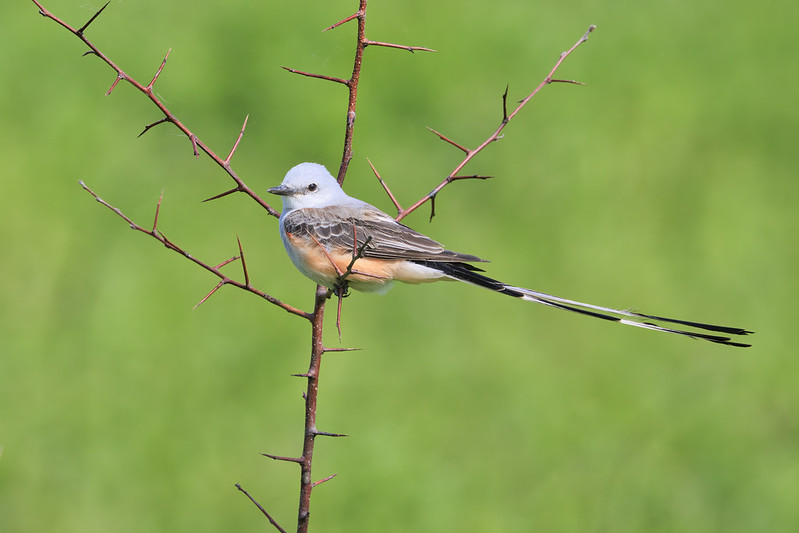
Scissor-tailed Flycatcher Thorny Perch at Sequoyah Refuge
I photographed this beautiful Scissor-tailed Flycatcher while it rested among a maze of sharp thorns. The delicate pink, gray, and white plumage looked even more striking against the rugged branches.
Scissor-tailed Flycatchers are easy to recognize by their exceptionally long, forked tails. Those tail feathers help them make quick turns while chasing flying insects across open grasslands, fields, and prairie habitats. During spring, males also perform impressive aerial displays to attract mates, showing off both their flying ability and their distinctive tails.
Seeing one pause long enough for a photograph is always a welcome opportunity, especially when it chooses such an interesting perch.
Why Thorny Trees Make Great Hunting Perches
Open perches give flycatchers an excellent view of the surrounding landscape. From elevated branches, they can watch for insects before launching into quick aerial pursuits.
The thorn-covered tree added another layer of interest to this scene. Its sharp branches framed the bird without hiding its graceful shape. The contrast between the elegant flycatcher and the rugged perch made this one of my favorite images from that morning.
This wasn’t the only memorable moment with this bird. I also photographed it catching a butterfly, which you can see here: Scissor-tailed Flycatcher Eating A Viceroy Butterfly.
Photographing This Spring Flycatcher Encounter
The light was bright enough to freeze the bird while still showing detail throughout its feathers. I stayed at a comfortable distance and let the long lens fill the frame without disturbing the bird’s natural behavior.
Camera settings:
- Camera: Canon EOS R7
- Lens: Canon RF 100-500mm F4.5-7.1 L IS USM
- Location: Sequoyah National Wildlife Refuge, Oklahoma
- Date: April 30, 2023
- Time: 10:33 A.M.
- Aperture: f/8
- Shutter Speed: 1/1600 second
- ISO: 1250 (Auto)
- Exposure Compensation: +0.3
- Focal Length: 500 mm
Encounters like this remind me that wildlife photography is often about more than the animal itself. Sometimes the perch, the light, and the surrounding habitat come together to create a photograph that tells a richer story about the place and the wildlife that lives there.