Every trip to Wichita Mountains Wildlife Refuge gives me something worth remembering. On this visit, it was a group of Whitetail Does that kept showing up around my camp and nearby roadsides, and many of them looked heavily pregnant.

I saw these does on three separate occasions during the trip. A few bucks were out in the distance too, but I never got a clean shot of them. The does were the real story this time.
Wildlife Notes
What stood out to me was how many of these does still appeared to be carrying fawns in early June. That caught my attention because I would normally expect many fawns to be on the ground by then. I had seen something similar before in another post, Witnessing a Pregnant Whitetail Doe, which made this sighting even more interesting.

From what I found after looking into it, late spring pregnancies can still make sense. Whitetail Does usually carry fawns for about six to seven months. If a doe was bred later than normal, especially after an earlier cycle did not result in breeding, she could still be pregnant in June. The original post also noted that breeding timing can vary by region, and that may help explain what I was seeing in Oklahoma.
Even so, I want to keep this careful. I was judging by appearance in the field, not by any confirmed exam. These does looked late in pregnancy, and that is the most accurate way for me to put it.
Photography Notes
These deer were calm enough to watch, but I still had to work fast. I made these images hand-held, which gave me the freedom to react quickly as the does moved through the area. That approach works well when deer are moving through a campsite or feeding near a road edge.
Camera Setting For the First Photo:
- Camera: Canon EOS R5
- Lens: Canon RF 100-500mm F4.5-7.1 L IS USM
- Focal length: 500mm
- Aperture: f/8
- Shutter speed: 1/800 second
- ISO: 5000
- Exposure compensation: -1/3
- Support: Hand-held
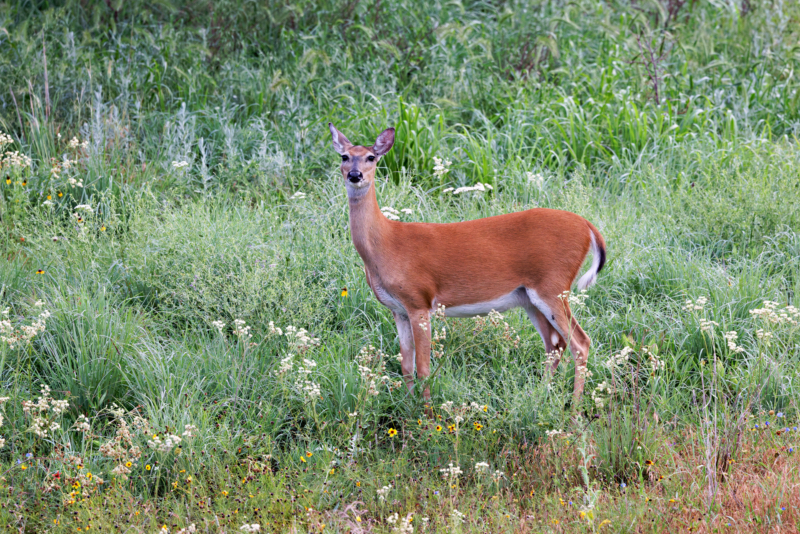
The longer focal length helped me isolate each doe and keep the background from getting too busy. Shooting hand-held let me respond fast as the deer shifted position and changed direction. In light like this, I would rather accept a higher ISO than risk blur on an animal that may stop, look up, and move again in a second.
Closing
I always enjoy seeing Whitetail Deer at Wichita Mountains Wildlife Refuge, but this group stayed with me a little longer. Watching these does move quietly through camp and across the refuge was a good reminder that even a familiar species can still surprise me.
Trips like this are why I keep going back. There is always another small moment to notice, and sometimes that moment turns into a photograph and a question worth bringing home.