I was finishing up my morning of wildlife photography at the Sequoyah National Wildlife Refuge in Oklahoma. Before leaving, I decided to drive down the road leading to the Moody Boat Ramp to see if I could spot any interesting insects or frogs.
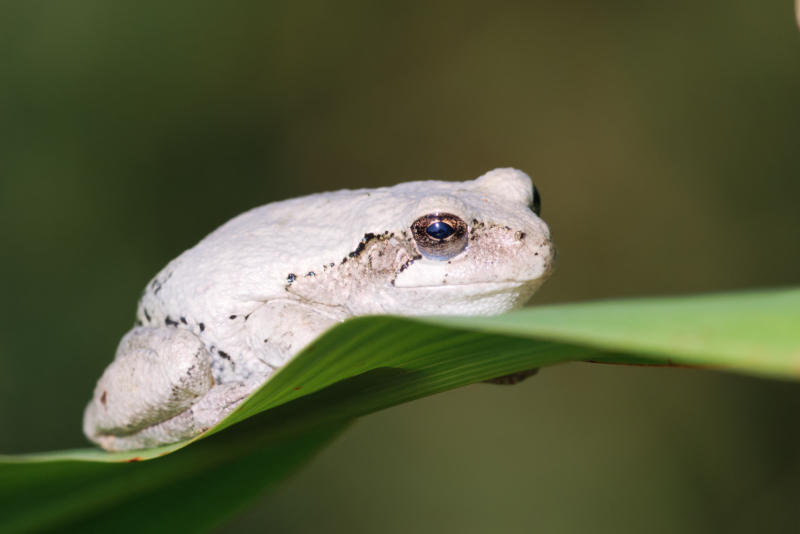
After turning around at the boat ramp parking area, I slowly drove back while scanning the Johnson grass along the road for potential photo subjects. A few hundred yards up, a small gray tree frog on top of a leaf caught my eye.
The Discovery
As I positioned my camera, the wind caused the leaf to sway. The frog shifted its position, and I caught a glimpse of bright yellowish-orange on the inside of its legs, a telltale marking of the Gray Tree Frog.
Capturing the Moment
I carefully positioned my camera and telephoto lens out the truck window to capture some images of this frog. This was my first time seeing and photographing a Gray Tree Frog. I feel fortunate to have come across this one perched on the grass by the roadside. Being able to photograph this frog in its natural habitat made my morning outing a success. I look forward to returning to the refuge to see what other wildlife I might encounter.
Conclusion
Encountering and photographing the Gray Tree Frog at Sequoyah Refuge was a memorable experience. The thrill of spotting this unique amphibian in its natural habitat added a special touch to my wildlife photography journey. I can’t help but anticipate my next adventure at the refuge, eager to discover more of the remarkable wildlife that calls it home.
Gray Tree Frog FAQs
1. Are Gray Tree Frogs common at Sequoyah Refuge?
Gray Tree Frogs are not the easiest amphibians to spot at Sequoyah Refuge, but they do live in suitable habitat there. They blend in well with bark, leaves, and grasses, so they can be easy to miss unless one is out in the open.
2. What is a Gray Tree Frog?
A Gray Tree Frog is a small tree-climbing frog known for its rough, mottled skin and excellent camouflage. Even though it is often called gray, its color can vary from gray to green or brown depending on light, background, and surroundings.
3. Where do Gray Tree Frogs usually live?
Gray Tree Frogs are found in wooded areas, wetlands, and places with nearby water. They often stay hidden in trees, shrubs, and tall vegetation during the day, then become more active in warm weather.
4. Why are Gray Tree Frogs hard to find?
One reason they are so easy to overlook is their camouflage. Their skin color helps them blend into bark, leaves, and stems, which gives them protection from predators and makes them a real challenge to spot in the field.
5. What do Gray Tree Frogs eat?
Gray Tree Frogs feed mainly on insects and other small invertebrates. Their diet can include flies, beetles, moths, ants, and spiders, which makes them helpful for natural insect control.
6. Can Gray Tree Frogs climb smooth surfaces?
Yes, they are excellent climbers. Their toe pads help them grip leaves, stems, bark, and even smooth surfaces, which is one of the traits that makes tree frogs so well adapted to life above the ground.
That is one gorgeous frog!