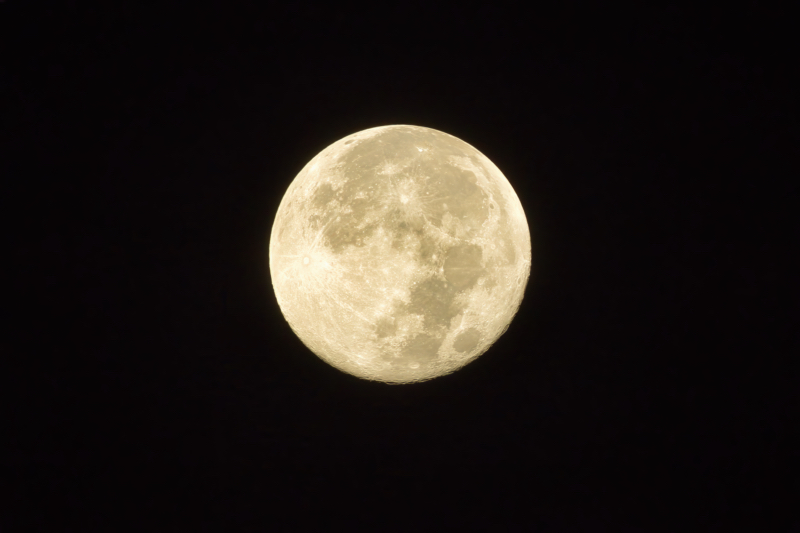
On the morning of September 30, 2023, I stepped outside before sunrise and found the Harvest Moon hanging in the western sky. The air was cool and still, and the moon had a soft glow that immediately caught my attention. I did not have to go anywhere. This one was right there over my backyard in Lavaca, Arkansas.
I grabbed my Canon EOS R7 and my 500mm lens, mounted the camera on a tripod, and got to work while the light was still right.
What Makes the Harvest Moon Worth Photographing
The Harvest Moon is the full moon closest to the autumnal equinox. It has a long history tied to farming, when the extra moonlight helped farmers finish bringing in their crops before the first frost. For me, it is one of the best full moons of the year to photograph.
This particular moon was also the fourth and final supermoon of 2023. A supermoon happens when the full moon occurs near its closest point to Earth. That makes it appear slightly larger and brighter than average. The difference is subtle in photos, but it still makes the event worth paying attention to.
Timing is everything. At 5:51 AM, the moon was dropping toward the western horizon, and that position gave it a color and look that you do not see when the moon is high overhead.
Why the Harvest Moon Looked Orange
One of the first things I noticed was the warm orange color. This was not caused by the moon being high in the sky. It was the exact opposite.
When the moon is low on the horizon, its light has to travel through a thicker layer of Earth’s atmosphere before it reaches your eyes and camera. The shorter blue wavelengths scatter in all directions. The longer red and orange wavelengths continue through. This process is known as Rayleigh scattering.
The result is a moon that appears orange, amber, or even red when it is rising or setting.
When the moon is high overhead, it usually looks white or pale yellow because its light passes through much less atmosphere.
This Harvest Moon was in the perfect position to show that warm color as it moved closer to the horizon.
Camera Gear and Exposure Settings
I used my Canon EOS R7 paired with my Canon EF 500mm f/4L IS USM lens. That focal length lets the moon fill a good portion of the frame without needing heavy cropping.
Moon photography can easily fool your camera meter because the moon is bright against a dark sky. I always shoot in Manual mode so I can control the exposure myself.
I also reduced the exposure slightly to protect the highlight detail on the moon’s surface. Without doing that, the bright areas can lose texture.
Here are the exact settings I used:
- Aperture: f/7.1
- Shutter Speed: 1/800 sec
- ISO: 500 (Auto)
- Exposure Compensation: -1.0
- Focal Length: 500mm
These settings allowed me to hold detail across the entire surface of the moon.
Why Early Morning Is the Best Time
I have found that early morning is one of the best times to photograph the moon. The air is usually steadier than it is in the evening, and the moon is often lower in the sky where it shows more character and color.
The window does not last long. Within minutes, the moon continues toward the horizon and eventually disappears.
That is part of what makes it special. You get one chance, and then it is gone.
Moments like this remind me that some of the best wildlife and nature photography opportunities are right outside your own door.