A bison’s eye can hold the whole frame. At Antelope Island State Park in Utah, I photographed this tight portrait from inside my pickup. The close view revealed the horn, heavy coat, and fine detail around the eye.
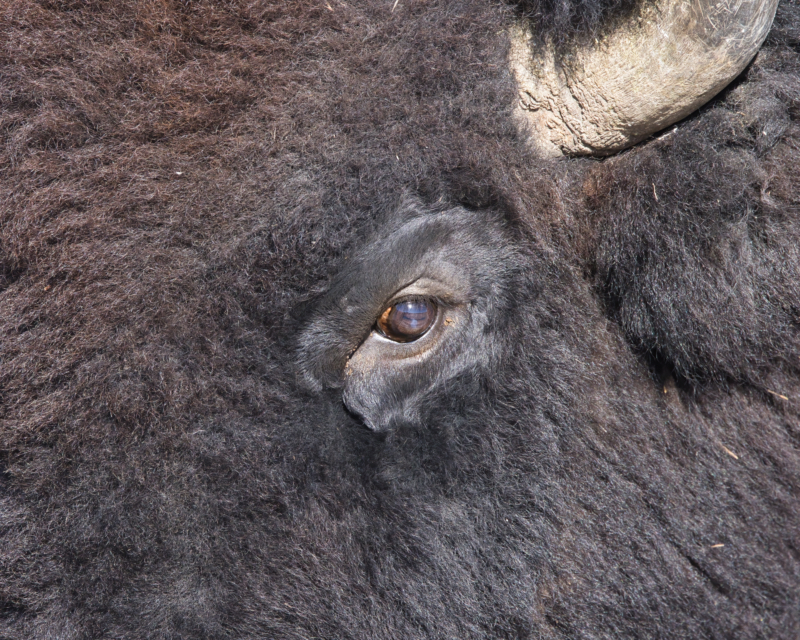
Antelope Island Bison in a Tight Portrait
I found this bison during an early-June morning at Antelope Island State Park. I made the photograph at 9:51 a.m. The animal filled the frame at a focal length of 500 mm.
The portrait shows one eye, part of a horn, and layers of dark, shaggy fur. Those details suggest the bison’s size without showing its full body. They also give the photograph a quiet, direct feeling.
Bison roam and graze freely within the park. Even when one looks calm, I never treat it like a tame animal. I stayed inside my pickup and respected its space.
For a wider view, see Bison Walking the Great Salt Lake Bed at Antelope Island.
Photographing the Bison From My Pickup
I rested the camera and lens on a beanbag over the open window. That support gave me a steady platform while I remained inside the vehicle. It also let me frame the eye and horn with care.
The morning light revealed texture in the horn and thick coat. I watched the exposure closely to retain detail in the dark fur. The tight composition kept every part of the frame connected to the animal.
- Location: Antelope Island State Park, Utah
- Date and time: June 1, 2022, at 9:51 a.m.
- Camera: Canon EOS R5
- Lens: Canon RF100-500mm F4.5-7.1 L IS USM
- Support: Beanbag on the open pickup window
- Exposure mode: Manual
- Aperture: f/8
- Shutter speed: 1/1600 second
- ISO: 2500, Auto ISO
- Focal length: 500 mm
This photograph works because the eye becomes the center of the story. The horn adds shape, while the fur fills the frame with texture. Together, those details create a strong bison portrait.
The encounter also reinforced a lesson I value in wildlife photography. A close-looking photograph does not require moving closer. A long lens, stable support, and respect for the animal can do the work.