I photographed this curious white-tailed doe near Ouachita National Forest. She was moving through the trees with two fawns I had photographed during the same encounter. I shared more about them in Twin Fawns Near Ouachita National Forest.
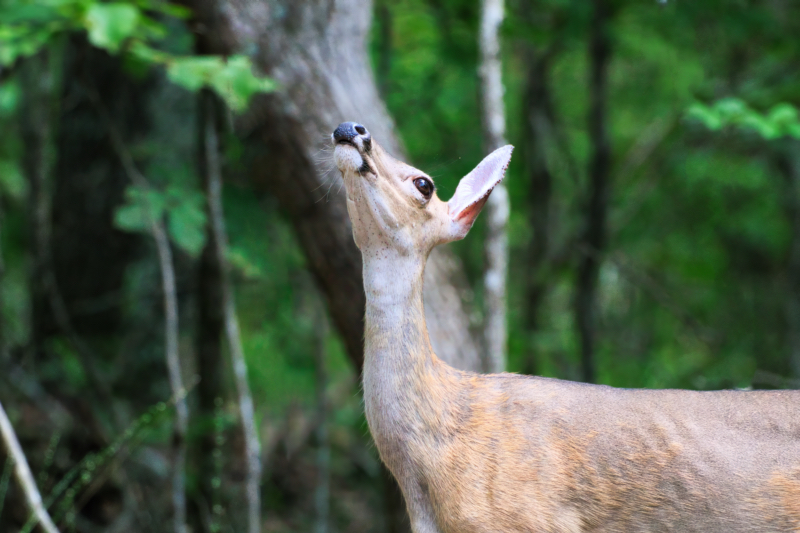
A Curious White-tailed Doe Pauses
My attention had been on the twin fawns and their mother as they traveled through the forest. The doe soon gave me another behavior to watch.
She stopped and raised her head toward the branches. I checked the trees because I thought something might have startled her. Birds were fluttering among the leaves, but I saw no other cause for concern.
The doe’s ears pointed toward the activity. Her posture remained relaxed, and she showed no clear sign that she was preparing to flee. She seemed interested in the commotion above her.
I cannot know whether curiosity caused her response. That was the impression I formed from her calm posture and the attention she gave the birds.
Photographing the Doe’s Raised-Head Pose
The doe’s position created a different photograph from the usual deer portrait. Her long neck, raised head, and alert ears directed attention toward something outside the frame.
I photographed her while she held that pose. Her posture provided the main visual clue. Her gaze encouraged me to study the branches, much as I had done during the encounter.
This photograph also shifted the story away from the fawns for a moment. Their mother became the main subject, and her response to the birds added another part to the encounter.
Watching Before Pressing the Shutter
Wildlife behavior can be easy to misread from one photograph. A raised head might suggest alarm, curiosity, or attention to an unfamiliar sound. I use the moments before and after a photograph to understand what I saw.
In this case, I watched the doe before and after taking the picture. Her relaxed posture gave me no reason to think she felt threatened. I still prefer to describe her behavior as it appeared instead of claiming to know her thoughts.
The twin fawns first caught my attention that day. Their mother provided the photograph I remembered for a different reason. Her brief pause reminded me to watch every animal in the scene and notice small changes in behavior.