I was sitting on my deck with my camera when a Northern Mockingbird did something I had never seen before. It grabbed a chunk of suet, flew straight to my bird bath, and dropped the piece into the water.
That moment sent me down a rabbit hole of theories. I still do not have a definitive answer, but I have a few good guesses.
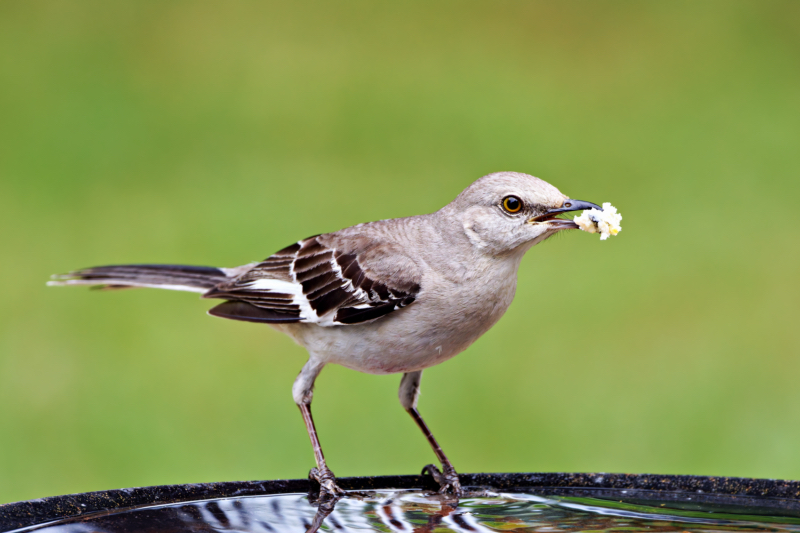
Wildlife Notes: Northern Mockingbird at the Suet Feeder
A Surprising Regular
Northern Mockingbirds are primarily insect and fruit eaters. Suet feeders are not part of their typical diet, and most field guides would not list suet among their preferred foods. But mockingbirds are also opportunistic foragers. Some individuals will explore food sources outside their usual range, especially when they see other birds visiting regularly.
This bird had already become a regular at my feeding station. That alone was worth noting. It was not just a one-time visit. It showed up often enough that I recognized it.
The Dunking Moment
The bird grabbed a chunk of suet from the feeder and flew about ten feet to my bird bath. Then it dropped the chunk into the water. It did not hesitate. It stood there for a second, retrieved the soaked piece, and flew off with it.
The whole thing was over in a few seconds, but it was deliberate enough that I do not think it was a simple accident.
Why Would a Mockingbird Dunk Its Food?
I have three theories, and honestly, any of them could be right.
Softening the suet. Suet can be dense and firm, especially on a cool morning. Dunking it in water may make it easier to break apart or swallow. This is the theory I lean toward, based on how intentional the dunking looked.
Caching prep. Mockingbirds are known to cache food for later. Wetting the suet might help it stick to a branch or bark crevice where the bird intends to store it until it gets hungry again.
A lucky recovery. It is also possible the bird just dropped its prize by accident and scooped it back up fast. Mockingbirds are agile and quick. What looked purposeful may have been a well-executed improvisation.
I have seen a reader comment mention a juvenile Grackle doing something similar with an insect, dunking it in a bird bath before eating it. So this behavior may be more common than it looks. If you have seen it yourself, drop a note in the comments.
Photography Notes
Shooting from the Deck Rail
I photographed this scene from my deck using a beanbag on the rail for support. Having the feeder and bird bath set up close together made it possible to frame both in the same shooting area without repositioning. The mockingbird had been coming around long enough that it was relaxed and not spooked by my presence.
At 800mm, the bird filled the frame well enough to show the suet chunk clearly in its bill. That kind of detail is what makes a behavior shot work.
Camera Settings:
- Camera: Canon EOS R5
- Lens: Canon RF 200-800mm F6.3-9 IS USM
- Focal length: 800mm
- Aperture: f/9
- Shutter speed: 1/1000 sec
- ISO: 2500
- Exposure compensation: +2/3
- Support: Beanbag on deck rail
The ISO of 2500 is on the higher side for a close backyard shot, and the positive exposure compensation suggests the light was a little flat at the time. A shutter speed of 1/1000 sec was enough to freeze the bird cleanly, which matters when you are trying to document a behavior rather than just a perched bird.
A Good Reminder About Backyard Feeders
You do not need to drive to a wildlife refuge to see something that genuinely surprises you. A suet feeder, a bird bath, and a little patience will do it. This mockingbird reminded me of that.
If you have a suet feeder and a bird bath close together, keep your camera nearby. You never know what you might catch.
Steve, Last year (2023) I had a juvenile Grackle that caught a large insect and brought it to a birdbath. He dunked the insect several times before ultimately swallowing the bug. Here is a link to a photo on my Flickr page. https://www.flickr.com/photos/19822693@N05/53075116114/in/dateposted-public/
Interesting and cool photo!